Who is Roberto Cipresso?

Who is Roberto Cipresso?

If you want to thrill someone,  first try to feel  the same emotions you desire to awake…” .

R. Cipresso.

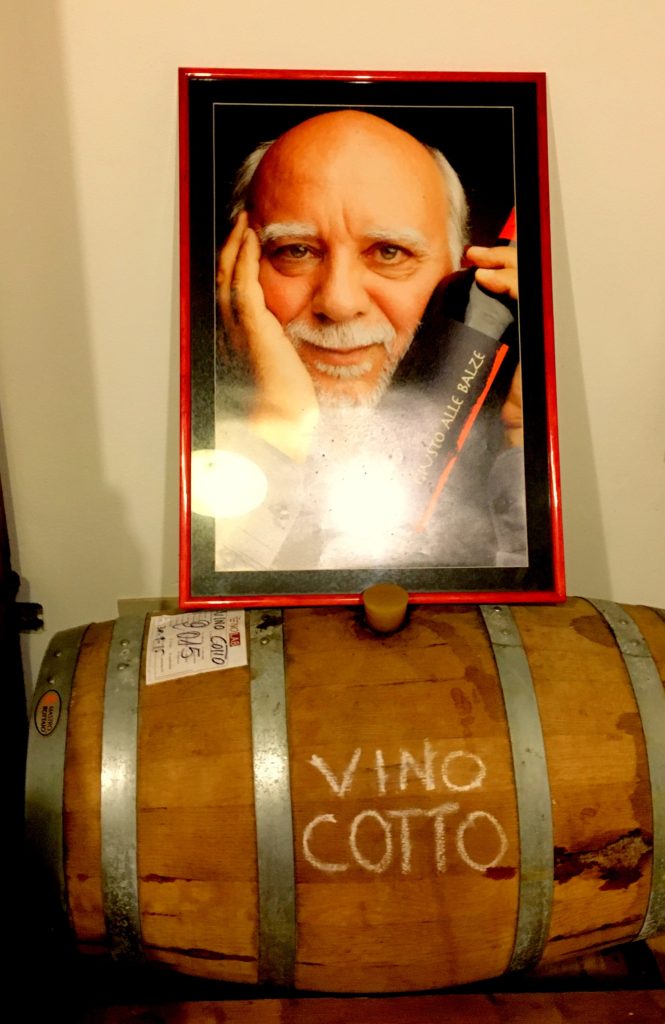
Roberto Cipresso, international winemaker of Montalcino

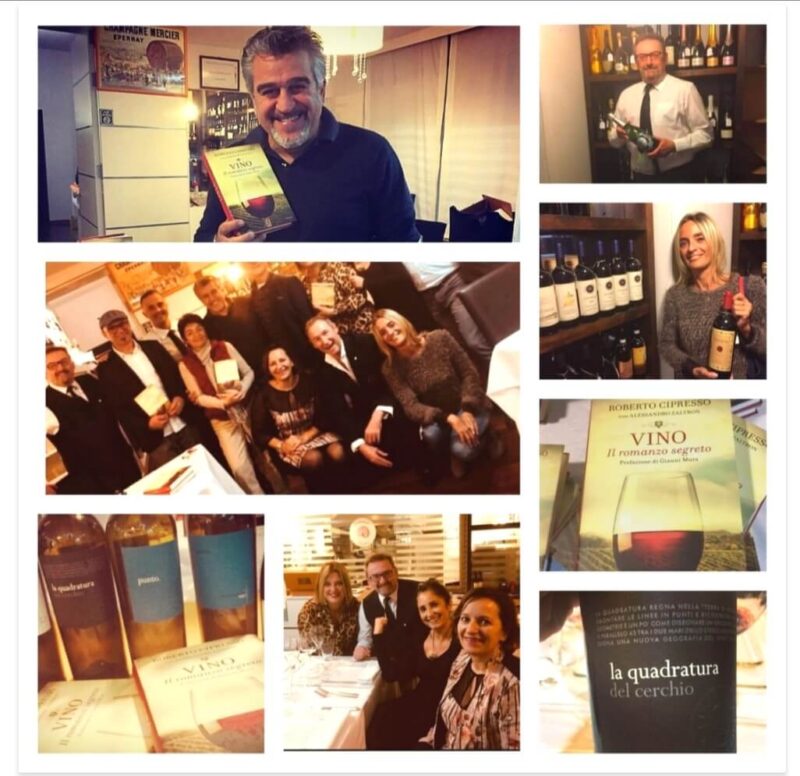
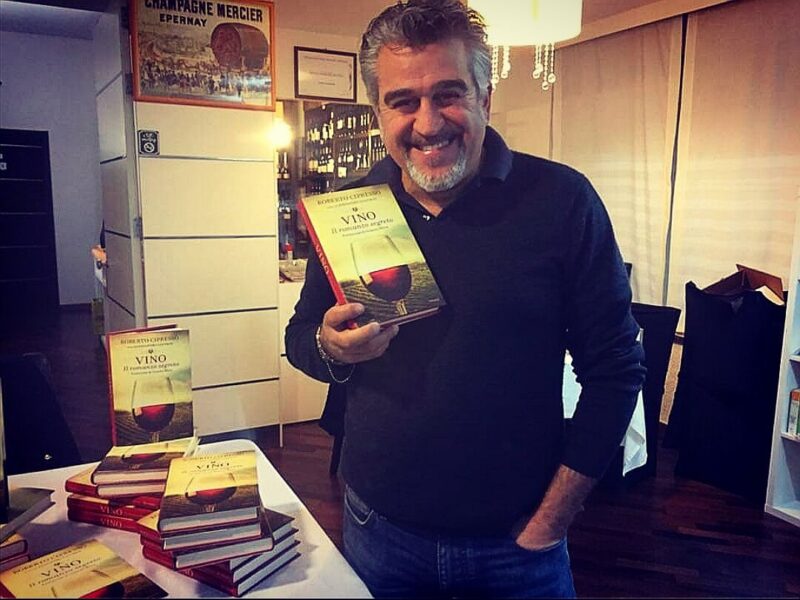
Scanning across the bookshelves in my flat, it dawns on me that my collection falls into three categories: wine, food and  travel! The three passions that form the  main plot of  Wine, the secret Novel , a book written by Roberto Cipresso. Roberto Cipresso presented his  outstanding work at ‘Nautilius, an elegant restaurant by the sea and close to  Pisa .

It was an unforgettable event  that allowed me  to meet  one of the most important winemaker in  Italy, Roberto Cipresso . He is a special person, as well as a great wine entrepreneur.  From his base in Montalcino, Tuscany, he has changed winemaking worldwide. How?  Read his incredible story, and you will find the answer!
Roberto-Cipresso-The- Secret -Novel

‘Wine the Secret Novel’ , a novel by Roberto Cipresso

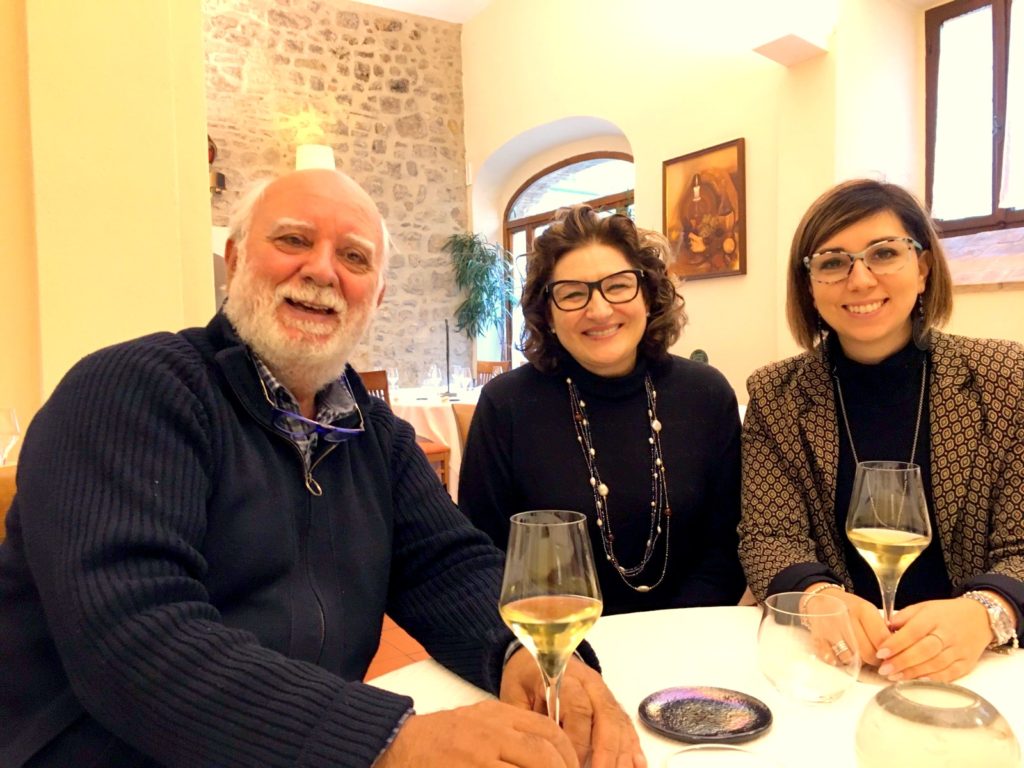
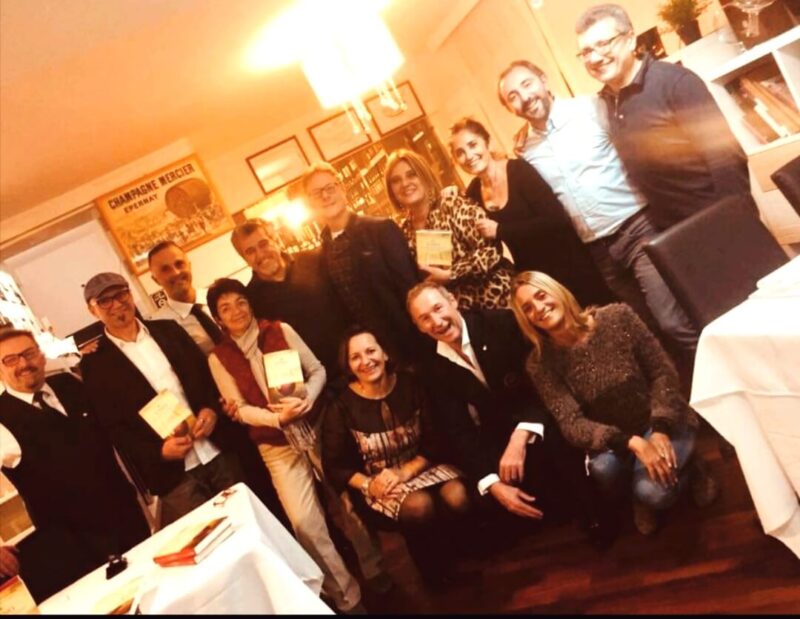
Andrea Baldeschi , the owner of the ‘Nautiliusrestaurant,  hosted that memorable dinner in honour of  Roberto Cipresso.  A crowd of people were waiting to hear the famous vigneron speak about his life and his professional achievements.

First of all, Roberto Cipresso greeted us all with a big smile and then went on to introduce  ‘Wine, the Secret Novel‘  , one of  the three books he has written about wine.  It is an attempt to give a general outline of the history of wine.  Wine has rolled its barrel from the shores of the  Black Sea to the mountains of the Andes, following humans and their dreams. His book goes back through time  retracing the grape’s conquest of the world, stopping in each winemaking country, from the oldest to the most recent,  discovering wines past and present, while also looking to the future.

3 tops wines of Roberto Cipresso 

That evening at the ‘Nautiliusrestaurant there was also a fantastic wine tasting, including some of the best wines of Roberto Cipresso :

    • ‘Punto Bianco Toscana IGT :  This is a white wine made from Vermentino and Verdicchio. These grapes are the most representative of Italy, being cultivated in the region of the  the 43rd Parallel. This is  an imaginary line, which  traces through all the places that have given origin to viticulture throughout the world from Europe to the New World. The wine had a dry and even astringent taste , with a  contrasting rich coconut aroma, giving a nice round feel in the mouth, and a long-lasting finish.  It was paired with a delicious tuna pasta;
    • ‘Pi Greco Toscana IGT ‘ : This is a red wine made of 100%  Sangiovese   . It  offers primary flavours of tart cherry, red plum, strawberry, and fig, with subtle notes of roasted pepper, leather, and clay.  In its nose offers aromas of earth and tea leaf.  On the palate it is a full-bodied wine,  displaying a marked acidity, an important tannic structure and a long and intense persistence. It  was paired with a pasta enhanced with wild boar ragù;
    • Quadratura del Cerchio’ : This wine is made from  Sangiovese (60%),  Montepulciano (20%) , and  Sagrantino (20%).  This is Roberto Cipresso‘s first attempt to make the ideal wine and it is his first attempt at wine experimentation. Its grapes are the best in Italy, and above all they grow along  the 43rd  Parallel!  This wine went perfectly with a  dish of (soft) veal and tiny roast potatoes.

Guests enjoyed the pleasant atmosphere of that unforgettable dinner at the ‘Nautilius restaurant, while  Roberto Cipresso was seducing us all with his beautiful spell.  Here  are some important acts about his life  and professional background.
Roberto-Cipresso-writer-winemaker-Montalcino

Who is Roberto Cipresso? 

I felt the power of Roberto‘s personality,  while he was presenting his book that evening at the ‘Nautilius restaurant! Roberto Cipresso is an oenologist, an international  winemaker, and writer. Without any doubt he is also a visionary leader . His way of  life makes him stand out from the rest of the crowd as regards the field of wine.

He can imagine things that others cannot imagine and sees the whole  landscape of winemaking as a big picture,  and not a single step. He is present and focused. You can connect with him, when  he talks about what he has in mind, or  when he teaches you something about wine,  or when he tells you about his travel, his previous job experiences, and his life!

The story of Roberto Cipresso 

Roberto Cipresso was born in  Bassano del Grappa (Veneto) in 1963 . Initially his first love was the mountains. He studied agriculture and received a master’s degree in viticulture in Padua, Northern Italy only out of necessity.  He thought  that skiing and climbing would  be his future,  though a terrible accident caused him to  change his ideas.

In order to study with Professor Attilio Scienza, a respected Italian scientist in the field of vine, in 1987 Roberto moved to Montalcino  . Forgetting that tragic episode,  he fell in love with the world of the wine,  thus  starting his winemaking career at three outstanding estates in Tuscany :

Mountains have played a large role in the life of  Roberto Cipresso.  In fact, he learnt how to survive and how to know  his limits! At the same time he improved his skill in observing nature, developing an extraordinary knowledge  of the vineyards of Tuscany in order to create wine.

He  learnt a lot about wine during his younger years in Montalcino , from the planting of grapes to how  the wine was bottled. It was the most challenging and formative step of his fantastic life’s work with wine.

The goals of Roberto Cipresso

Roberto Cipresso soon gained success, being invited to advise Italian producers  as well as wineries around the world, including those in South America (‘Achaval-Ferrer Winery’,  Argentina). Travelling helped  Roberto Cipresso open his mind. He experienced different realities of wine ,  observing wine from a different angle,  and eventually was ready to work as a wine consultant !

The opportunities Roberto Cipresso had to put his professional skills and ideas  as regards wine into practice are exemplified by  four of his major projects:

  1. ‘Fattoria La Fiorita’In 1992 together with two popular partners, he founded this boutique winery in Castelnuovo dell’Abate, near Montalcino , which is still running. This boutique winery produced the iconic Brunello , gaining  numerous prestigious awards, including Parker points of 99, 98 and 97; 
  2. Winemaking project’: In 1999 at the behest of wine industry professionals he created a team of qualified consultants in the field of agronomy and oenology  in collaboration with his brother Gianfranco, and his friend Santiago Achaval, who is the founder of  the stunning ‘Matervini winery’ in Argentina ;
  3. ‘Wine Circus’: In 2001 he created this big  wine lab  in Montalcino  , where ideas and projects are shared with wine experts and universities   in order to solve  problems  regarding the winemaking process;
  4. ‘Poggio al Sole’: In 1990 he crafted this modern five starred wine relais , which is situated between Siena and Florence.  Here  Roberto Cipresso  planted his precious grapes of   Brunello   , which are used in  the making of the  best labels of his red wines.
The wine hits parade of Roberto Cipresso 

Recalling the most important enterprising ventures of Roberto Cipresso together with his lifetime achievements awards in terms of wine and food  culture, means understanding his complex and sensitive soul: 

The 3 books about wine written by Roberto Cipresso

The list here above would already be too long, taking into account that  Roberto often gave  lectures and speeches at wine schools and important universities in the world ! Already famous for his achievements in Italy and Argentina,  Roberto  rapidly obtained recognition in Europe and North America as one of the world’s elite winemakers.

Roberto is a creative and multitalented man. Along with the benefits of his many abilities and passions, there is his love for writing, represented by  another three books he has written about wine and its mystery, published between  2006 and 2009::
The ‘Cipresso 43rd project’. How to  make the wine of the future!

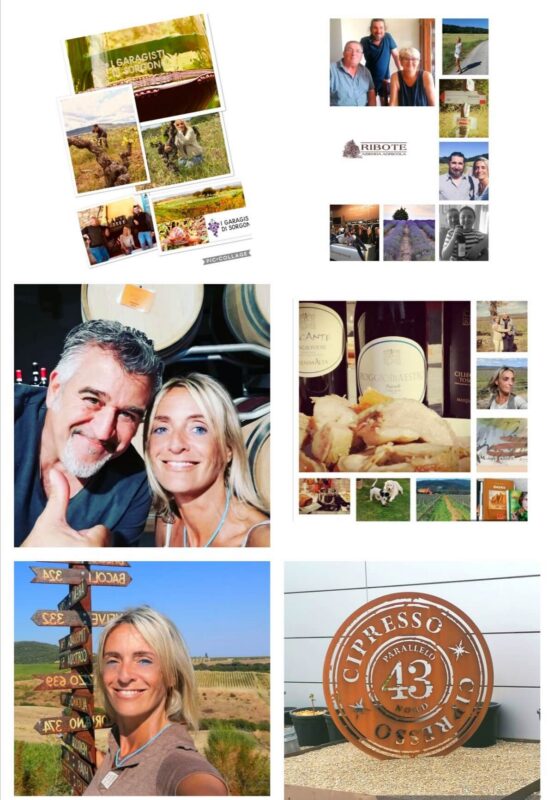
Without any doubt, Roberto Cipresso  is a  charismatic, brilliant and enthusiastic wine entrepreneur! He still continues on his incredible adventure in his inspiring  wine experiment entitled ‘Cipresso 43 rd project’. According to Roberto Cipresso, rules are important  in producing a perfect wine,  though they cannot stop evolution. We should consider rules as a point of departure, not as a point of arrival!

Bearing this in mind, Roberto  started his revolution in the world of wine, thereby provoking scandal! He went beyond the traditional concept of terroir, which was not identified as such as being in a specific area of the world, though within the same horizon!

The theory of the 43rd Parallel 

According to Roberto’s recent research this horizon is  the 43rd Parallel, a magical  line containing singular physical and spiritual features regarding wine production,  situated halfway between the Equator and the North Pole.  This parallel runs through central and florid places, which have shaped the main grapes and phases in the evolution of vine culture from Mesopotamia to the USA:

‘The Cipresso 43 rd project is an attempt to create an oenological itinerary using only grapes grown at a Northern latitude of 43rd degrees.  It could be considered an attempt to make the wine of the future.
Roberto-Cipresso-WeLoveItalyeu-wine-travel-blog-secret-novel-nautilus-restaurant-Tirrenia-Pisa

The X-factor of Roberto Cipresso

The life of Roberto Cipresso is about striving for excellence and harmony  not only in wine,  though  also in life.  Roberto doesn’t  limit himself only to his own thoughts and ideas. When you talk to him, he listens to whatever you have to say  attentively. He  encourages you to be as creative as possible and never to be afraid of presenting your own point of view!

Roberto  explained to me  the big picture of  his vision of wine and how to live  in this world. His  work is an essential part of his existence. It is not only about running a laboratory or doing analysis, it is mainly about being part of making something amazing. It  is by combining science, creativity and love, that you keep things interesting, and it is a great industry to be involved with as well. Roberto Cipresso  experiments with unconventional colors to find inspiration for his next masterpiece, that is still to come! I’m looking forward to it!

If you like my post, please subscribe to the socials of www.WeLoveitaly.eu :



“AIS of Lucca”, the “Italian Sommelier Association of Lucca”

“Accept what life offers you and try to drink from every cup. All wines should be tasted; some should only be sipped, but with others, drink the whole bottle.”

Paulo Coelho

“AIS of Lucca”, “Italian Association of Sommelier”

If you love wine, a  sommelier experience with the AIS of Lucca” (Italian Association of Sommelier”)  Tuscany,  is a chance of a lifetime:

    • To  explore the world of the  wine;
    • To learn how to build your own cellar:
    • To study food &  wine pairings;
    • To share your passion  enjoying life with friends!

What is the “AIS of Lucca” ?

AIS of Lucca” is one of the several “Italian Sommelier Association” branches  in each region of Italy. The “AIS” or “Italian Sommelier Association” is  an Italian non-profit organization founded in Milan on July 7, 1965, officially recognised and legally acknowledged by the Italian government on April 6, 1973.

Its founding members were :

The “Italian Sommelier Association” is part and founding member of the “Worldwide Sommelier Association” (“WSA”) , which is officially recognized across the world.

The AIS “ is one of the oldest and actually the largest sommelier association in the world, featuring more than 30.000 members only in Italy!

Which is the aim of  “AIS”?

The aim of “Italian Sommelier Association” , as stated in the third article of its charter, is:

  • To qualify sommelier’s role and profession, therefore adding value to wine, traditional specialties and gastronomy culture;
  • To promote, even in the legislative branch, the introduction of its didactic approach in hospitality related schools, as well as to endorse the sommelier’s professional role, international recognition and esteem.

Without any doubt, my educational experience at  AIS of Lucca” has ensured me to have all I need to take my  passion about wine to a high  level!

ais-lucca-wine-blog-weloveitalyeu

My  graduation as a sommelier 

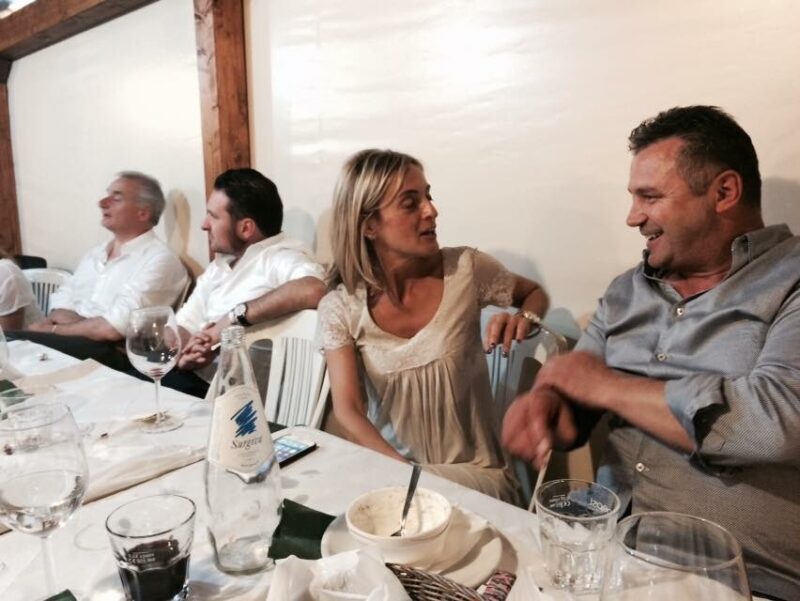
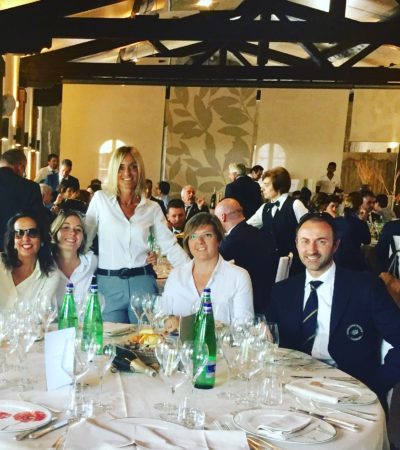
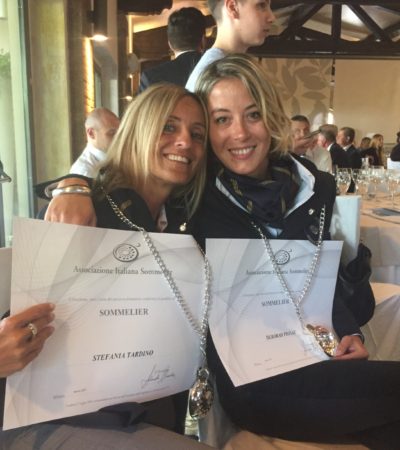
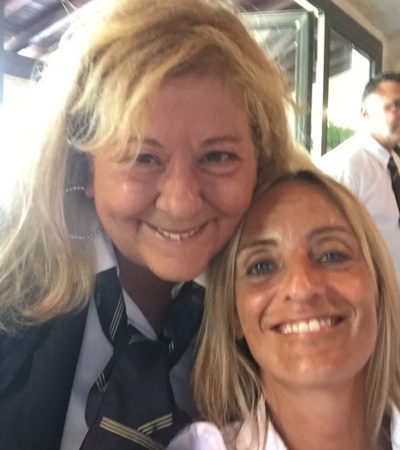
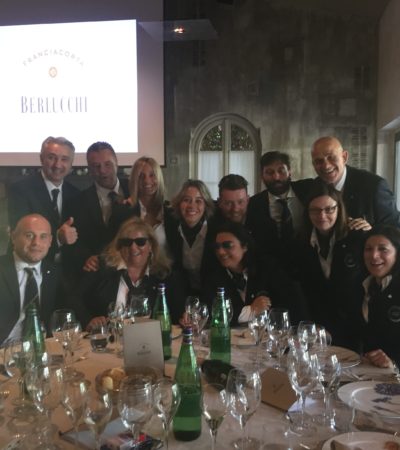
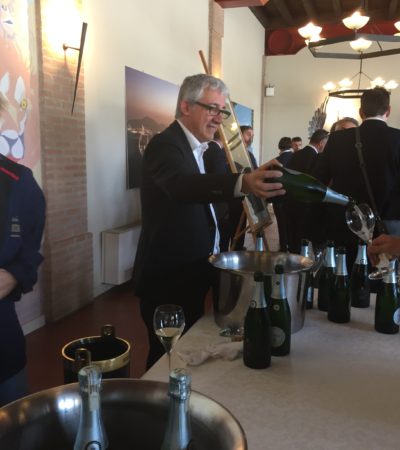
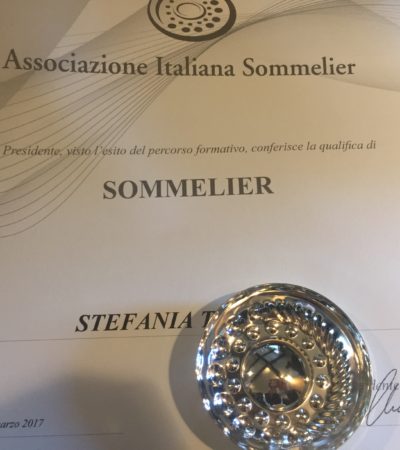
I studied hard for three years, and finally last summer I became a sommelier at AIS of Lucca”  ! After my exam in June , I celebrated the special occasion with other colleagues and friends at  “Berlucchi Winery “ in Franciacorta (Brescia)

My wine course at AIS of Lucca” was an incredible journey for : rounding out my knowledge about wine and  expanding  my  palate. It was something more than  connecting the dots between a flavour, such as clove and vanilla in a sample Pinot Noir!

There are two types of certified sommeliers: those who currently work in the industry, and those who go through the certification process to learn much more than wine, that is the area in which is produced. That’s me!

My adventure in the world of wine!

I started my adventure in the world of wine  by chance. Because  dealing  with tourism, attending a sommelier course in Lucca  was an unconventional  way to know  better Tuscany with all its beauty, art and culture.

I recognize that to be a sommelier  without working in the industry  is much harder,  since you’re not working with wine every day, you have to carve out time in your schedule to practice and to dedicate to wine. One option isn’t better than the other–you just need to know which category you’ll likely fall under before you become a sommelier.

The life of a sommelier!

In order to make it through the long class schedule and nerve-wracking final exam, you should have an ultimate end goal in mind from the beginning.

Some sommelier students drop out before the courses are complete, sometimes because they underestimate the amount of studying required to pass the exam. And sometimes because they only liked the idea of being a sommelier, without having a plan to use their education for a specific purpose.

To be a sommelier is not onòy a state of mind!

You need to have a purpose in mind when you receive sommelier certification! Becoming a sommelier is only the tip of the iceberg. The reality is that wine education never ends, even for those who are fully certified with every program.

Getting certified is only one method for growing a greater understanding of wine, and it’s not necessary for every wine ‘fan’. Before you pressure yourself into becoming certified, it’s important to ask yourself why you want to go through the experience, and whether it’s truly the right choice for you!

Wine is to discover a territory!

My fortune was to have clear ideas why to be a sommelier and to run into AIS of Lucca”  for my certification.

Studying for being a sommelier meant to meet wine Professionals  who loved exploring the best about wine & food tradition in Tuscany.  Nowadays, I ‘m really able to give useful tips for visitors who want to experience Italian kife style and who want to discover this awesome region  with my services in www.WeLoveItaly.eu

Why studying about wine so important ?

Recently, a friend asked why a person should invest in a wine class instead of purchasing a few bottles and having a liquid study session at home. I think it’s a great question!

Learning about wine seems a foreign concept to many,  but it’s actually a great deal of fun as well as financially rewarding – the more you know about wine, the better your wine purchases will be. You need to know at least enough to understand what makes you happy.

Wine makes you happy!

I know, wine makes you happy. But, which wines make you happiest? Until you try a well-curated selection, how do you know?  Learning the  “AIS” systematic approach to tasting will give you great insight into how your palate works.

In the  “AIS” course, I tasted top wines from different parts of and from all over the word. I got  great tasting experience there.

Wine is like a friend!

Of course, I could taste wine at home, but the difference  is that in the “AIS” course  my  tasting was  focused and guided. It was tasting with a purpose and  even after a one day class,  my tasting abilities  and my appreciation of what I tasted was considerably greater.

I can guarantee that “AIS” is not only a  a great place to get all your answers about wine with other like-minded wine lovers, but above all a possibility to make friendships with interesting people.

ais-lucca-travel-wine-blog-weloveitalyeu

Wine is a passion not a business! 

I love travelling and tasting good wine. Wherever I go, I always try  to find  the most unique label ,  the best food ,  and good people to have fun with!

So, why love wine? There are so many reasons!  Through wine, you can :

  • Meet great people:  Yes, there are so many great people behind and around wine!
  • Celebrate life: Yes, don’t you have wine when you’re celebrating a birthday, a wedding, Christmas, or a graduation?
  • Eat great food: Wine without food is not really wine, don’t you agree with me?

Above all , thanks to wine you can see the world!   Yes, wine is international, with it you discover new countries and regions, along with their history and culture. It’ s like a micro time travel machine, because  has  this magic  ability to transport you to the time (and place) they were made. Of course, not all of them!  For some wine drinkers, this is the real difference between a good and a great wine!

Sharing a glass of a well made and properly-aged wine can build bridges in friendships and help with discoveries of the soul, or just give you the nerve to open up your heart to those around you. It is a beverage to share, a beverage to savor, and a beverage to enjoy. And like many good things, it carries a responsibility to enjoy in moderation!

If you like my post, please subscribe to the socials of www.WeLoveitaly.eu :



‘Cantina Villa Santo Stefano’,  Lucca

‘Cantina Villa Santo Stefano’, Lucca

“Chi non ama le donne, il vino e il canto è solo un matto , non un santo”.

A. Schopenhauer

‘Cantina Villa Santo Stefano’,  Lucca

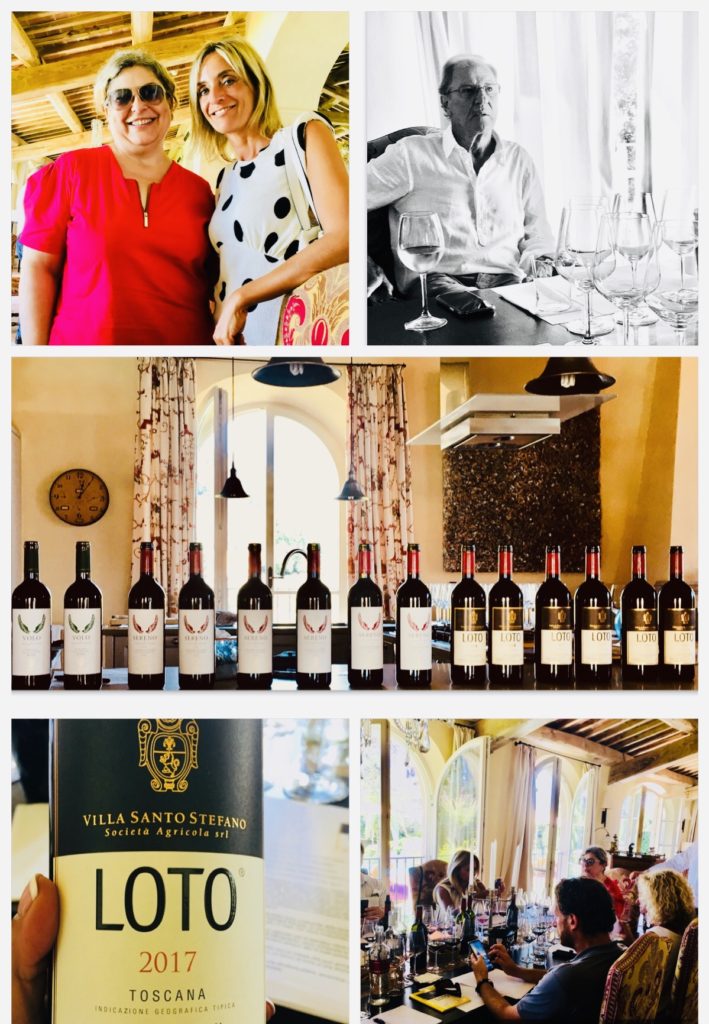
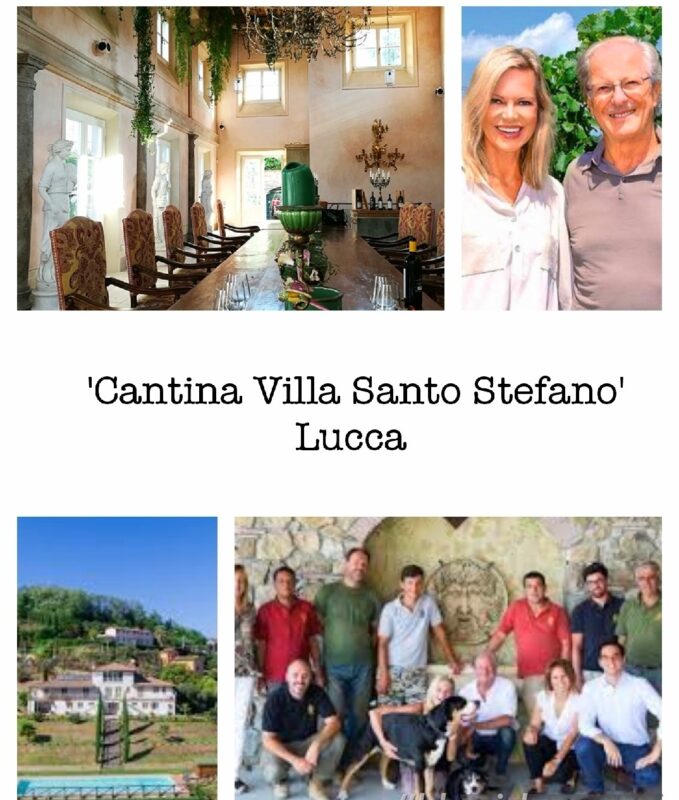
‘Cantina Villa Santo Stefano  è un’ azienda agricola di lusso, che definirei  quasi surreale per la sua bellezza. Essa sta nascosta , ma ancora per poco, tra le magnifiche e dolci colline lucchesi di Pieve di Santo Stefano. Claudia Martinelli, responsabile della società di marketing ‘Darwin & Food’ , mi inivita a una degustazione dei loro superbi vini.

‘Cantina Villa Santo Stefano’    è un pò difficile da trovare, almeno per me , specie sotto  un  sole cocente , quello tipico di una mattina di luglio .  Mi smarrisco   in macchina per delle stradine strette in direzione  Pieve di Santo Stefano  . Tuttavia non mi scoraggio . Dopo un’oretta da Pisa  raggiungo la loro  sede in via della Chiesa 504 B . L’emozione di ritrovarmi con altri giornalisti e blogger per questo evento straordinario è infinita. Seguitemi per sapere di cosa si tratta!

Wolfgang Reitzle e Nina Ruge

Arrivata a  Cantina Villa Santo Stefano i gestori ci accolgono con un sorriso enorme . Inizialmente facciamo un giro dentro il parco enorme. Questo è immerso in una natura ordinata e rigogliosa. Accanto la piscina c’è l’ingresso per la sala degustazione. Dopo avere varcato delle grandi porte in ferro battut, ci mettiamo comodi sulle sedie. Tutto lo staff della stampa è incantato dalla raffinatezza degli interni e dell’apparecchiatura della tavola, imbandita con posate d’argento.

Cantina Villa Santo Stefano vuol dire anche un serivzio eccellente ! Appena i camerieri servono i vari bianchi e rossi aziendali,  stiamo fermi e immobili ad ascoltare la storia della tenuta attraverso le parole dell’ ingegnere tedesco Wolfgang Reitzle. Lui  ne  è il fondatore  insieme alla moglie Nina Ruge, famosa giornalista e presentatrice alemanna. Ciò che mi stupisce è soprattutto l’ ottimo rapporto qualità prezzo dei loro prodotti enoici, che esprimono al meglio lo splendore lo spirito della Toscana.

Wolfgang Reitzle

Il sogno diventato realtà di Wolfgang Reitzle

Wolfgang Reitzle è il proprietario di Cantina Villa Santo Stefano . Questi è un signore   alto , distinto , di una classe innata. Lui è  felice  di parlare  di come nel tempo è riuscito a trasformare la sua passione per il vino in un lavoro, che adesso  si è  materializzato in Cantina Villa Santo Stefano .

Wolfgang Reitzle, ex dirigente dellaBMW’ e poi CEO della ‘Ford’, ci spiega che tutto è nato quasi per caso. Sin da piccolo l’imprenditore tedesco si reca frequentemente  in Toscana  per le vacanze  con la sua famiglia.  Da allora il desiderio di viverci è forte.  A tal punto che poi , nel corso della sua vita , decide di acquistare un fazzoletta  di terra  nella regione più amata d’Italia.

Come nasce la ‘Cantina Villa Santo Stefano’ ?

Wolfgang Reitzle  vuole creare così un posto dove coltivare la vite e produrre nettari divini  fatti di vitigni locali come:

L’ occasione è il 2001 . Wolfgang Reitzle compra  la ‘Villa Bertolli’ assieme ad alcuni oliveti e ad un vigneto di circa un ettaro. La propirtà era della famiglia Bertolli .  I signori Reitzle e Ruge ribattezzano la villa  Cantina Villa Santo Stefano. E lo fanno in onore della pittoresca Pieve del IX secolo’ , che si trova nelle immediate vicinanze.

cantina-villa-santo-stefano-lucca-wine-travel-blog-weloveitalyeu

‘Cantina Villa Santo Stefano’ , uno staff eccezzioanle per dei vini speciali

Wolfgang Reitzle ci confessa che non è facile mettere in piedi un’impresa agricola come Cantina Villa Santo Stefano  di così grande di portata. Non lo aiuta il fatto di essere straniero in Italia.  Perché ci sono molti problemi burocratici e logistici da risolvere. Non ultimo l’interrogativo se fare tutto ciò è da pazzi o da pionieri!

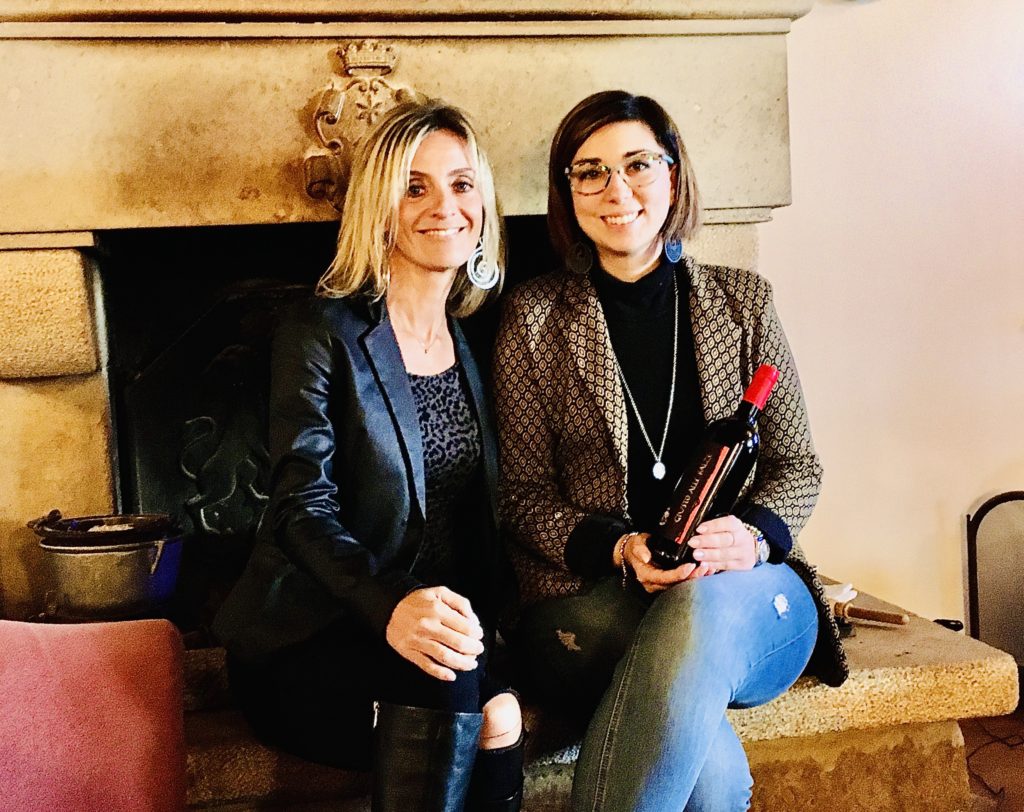
Da grande uomo di affari qual è Wolfgang Reitzle riesce nel suo intento . E dal 2005 a oggi l’avventura con Cantina Villa Santo Stefano continua con successo . Tutto ciò  grazie anche al supporto dei suoi affetti e dei suoi fidati collaboratori nelle figure di :

Al momento Cantina Villa Santo Stefano  rileva nei suoi 11 ettari di terreno:

La filosofia che guida la  Cantina Villa Santo Stefano  è la ricerca della perfezione nel fare vino ed olio sfruttando al massimo tutte le potenzialità di questo paradiso  benedetto da Dio.

cantina-villa-santo-stefano-lucca-wine-travel-blog-weloveitalyeu

I vini di ‘ Cantina Villa Santo Stefano’

I vini di Cantina Villa Santo Stefano sono particolari, biologici, strutturati i rossi e leggiadri i bianchi. Assaggiare un calice di vino lucchese è un’esperienza speciale. Questo   ancora una volta conferma la ricchezza del patrimonio vitivinicolo  della Toscana senza passare per forza attraverso nomi blasonati!

Degustazione di 5 vini 

Una delle caratteristiche più distintive dei vini  di Cantina Villa Santo Stefano è la sapiente mescolanza di vitigni autoctoni con varietà di origine francese.  Oltre un terroir da manuale fatto di peculiarità pedoclimatiche esclusive che sono:

  • Terreni misti e prevalentemente argillosi;
  • Una temperatura mite tutto l’anno;
  • Ua combinazione di vicinanza al mare e montagna, che conferiscono a questi vini il loro sapore distinto.

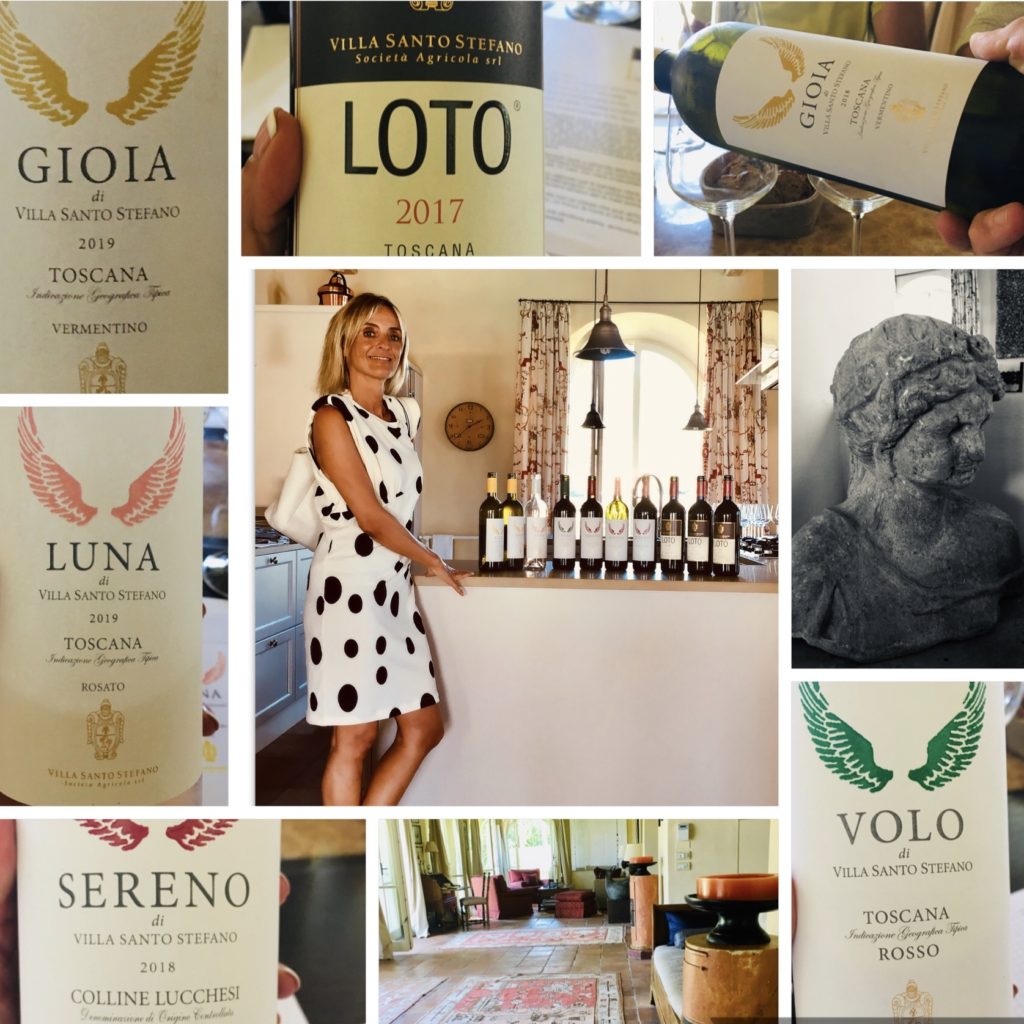
Ecco le etichette in assaggio della Cantina Villa Santo Stefano :

  1. ‘Gioia 2018 e 2019’ : è un ‘IGT Toscano’, un vino bianco fatto al 100 %  di Vermentino . Questo vitigno  cresce spontaneo dalla Lucchesia alla Liguria .  Esso proviene da un vitigno adiacente l’azienda esposto a Sud , vicino alle spiagge della Versilia distanti circa 20 km . Qui c’è un microclima straordinario, che si riflette nell’aroma fragrante del vino stesso. La selezione e la raccolta delle uve , è eseguita scrupolosamente a mano. E dopo la diraspatura e pigiatura, le uve subiscono una leggera macerazione di qualche ora prima di essere vinificate in bianco. La fermentazione dura dai 15 ai 20 giorni e si avvale delle tecnologie più innovative. Il  processo avviene infatti in vasche di acciaio a temperatura controllata tra i 15° e i 16°. Questo vino bianco, nelle due diverse annate, possiede un bouquet armonico e fruttato, una buona acidità e un tocco di mineralità che si avverte nel finale;
  2. ‘Luna 2019’ : fatto di 50% Merlot e 50% Sangiovese , è un rosé sobrio, che va bene su tutte le portate di mare e di carni bianche . Ed è perfetto anche per un aperitivo. Esso ha un colore rosa provenzale, al naso è pulito con profumi che ricordano la pesca bianca e la buccia di mela rossa;
  3. ‘Volo 2019’ : è ‘IGT Toscanofatto di  40% Petit Verdot, 40% Cabernet Sauvignon e 20% Alicante.  Questo è un un vino che si presenta con un colore rosso intenso e con sfumature violacee frutto della sua giovane età. Al naso è floreale, con note di prugne, more e ciliegie, con un finale delicato di cipria. Al palato si esprime frizzante, con un buon tannino ed un’ acidità equilibrata  che lo fanno diventare di gradevole beva;
  4. ‘Sereno 2016, 2017 e 2018’ : è una ‘DOC Colline Lucchesi fatto da  80% di Sangiovese e 20% tra Ciliegiolo e da altri vitigni del posto. Si tratta di un vino dal colore rosso rubino con riflessi porpora, al naso  note di violetta, frutti rossi e spezie. Al palato è morbido con un finale gradevole di frutta;
  5. ‘Loto 2015, 2017 e 2018’ : è il vino più pregiato di ‘Villa Santo Stefano’ fatto di  50% Cabernet Sauvignon,  40% Merlot e 10% Petit Verdot . Per ogni vite vengono selezionati non più di quattro grappoli, per garantire il massimo della resa da ogni pianta. Nel 2015 è stato installato un impianto computerizzato ad alta tecnologia utilizzato per garantire un processo di fermentazione e vinificazione ottimale. Di norma, il processo di fermentazione dura 12 giorni. L’affinamento dura, a seconda della tipologia di uva e dell’annata. Essa va  dai 12 ai 18 mesi ed avviene in pregiate barrique francesi, in una barriccaia a temperatura (15°C) e umidità (83%) controllate. Il tipo di legno utilizzato per le barrique viene selezionato a seconda della tipologia di uva. Al termine dell’affinamento viene composta la cuvée e viene quindi imbottigliato il vino, che dovrà attendere almeno altri 6 mesi prima di essere distribuito. Questo è un vino di spessore, di corpo, che si presenta con un colore che può arrivare al rosso rubino intenso ed ha sentori di frutti di bosco, tabacco e vaniglia.

cantina-villa-santo-stefano-lucca-wine-travel-blog-weloveitalyeu

Pranzo nel giardino della ‘ Cantina Villa Santo Stefano’

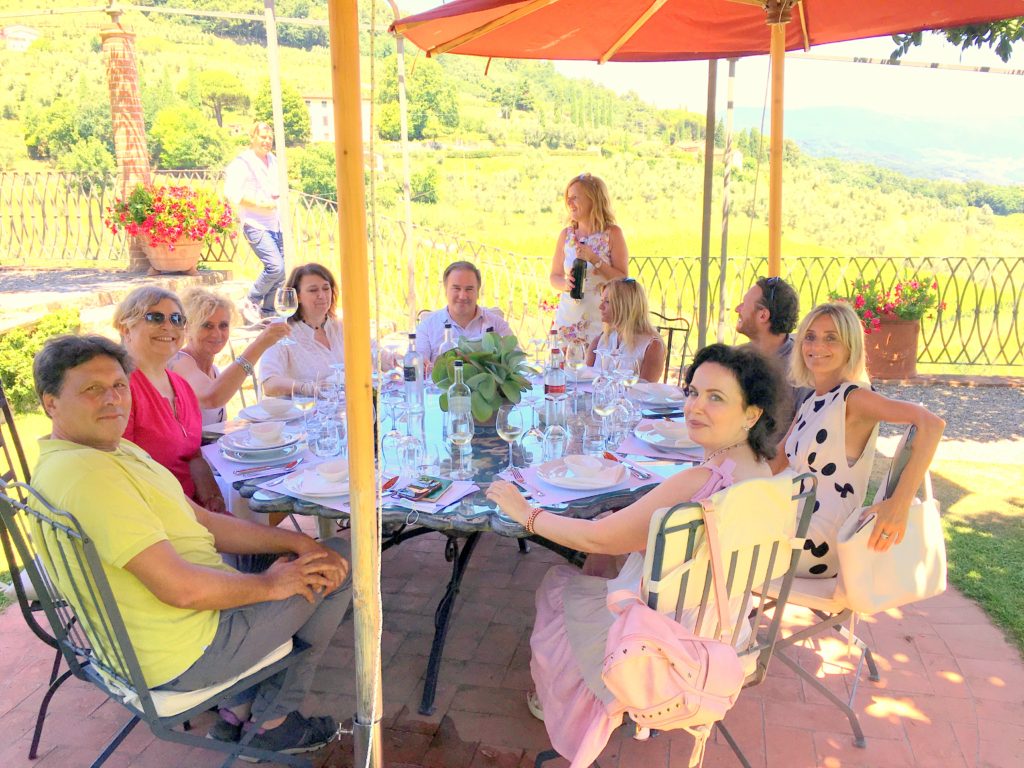
Tra una chiacchiera e l’altra il tempo vola . Lo stomaco brontola percè è ora di pranzo. Nel dehors esterno della Cantina Villa Santo Stefano tra fontane zampillanti di acqua e alberi abbracciati da boccioli di rosa iniziano il nostro lauto banchetto.

Il nostro pergolato ci protegge un po’ dalla calura estiva che finisce di darci fastidio non appena lo chef Riccardo Santini del Vignaccio ci annuncia il menù della festa:

  • Una panzanella di pomodoro e cipolle all’aceto balsamico;
  • Una ‘torta lunigiana  d’Erbi’ di bietole spinaci e rapini;
  • Uno sformato di fagiolini e formaggio di Scoppolato di Pedona’
  • Faraona, zuppa di porro e patate;
  • Un sorbetto al melone per pulire la bocca.

Regalatevi una fuga a ‘Cantina Villa Santo Stefano’! 

Cantina Villa Santo Stefano’ è un borgo incantato che ti strega non appena varchi il cancello all’entrata. Vi potete   perdere per ritrovarvi.  Vi rilassate tra il  lusso garbato  e tanti  vini pregiati . Questi danno il meglio riposando a lungo. Così sono  pronti per essere stappati e consumati per celebrare un momento speciale.

Cantina Villa Santo Stefano’   con i loro vini vi dà la possibilità di scoprire la Toscana. Perchè venire? I motivi sarebbero tanti, e vanno oltre l’uva!  Qui potere fare delle  vacanze all’insegna dell’arte e della storia, della natura, del mare o del relax,  Questa splendida regione sa offrire davvero di tutto e accontentare ogni tipo di viaggiatore: dalle città d’arte famose in tutto il mondo ai borghi medievali, dalle dolci colline del Chianti fino alle spiagge della Versilia e alle isole dell’arcipelago. Buon viaggio!

If you like my post, please subscribe to the socials of www.WeLoveitaly.eu :



‘Podere Marcampo’ winery, Volterra, Tuscany

‘Podere Marcampo’ winery, Volterra, Tuscany

“Accept what life offers you and try to drink from every cup. All wines should be tasted; some should only be sipped, but with others, drink the whole bottle.”

Paulo Coelho

‘Podere Marcampo winery , Volterra, Tuscany

Six years ago two things happened to change my life. First of all, I fell in love with Tuscany , and then I became a sommelier. These were the starting points allowing me to discover the hidden delights of the wine of Pisa . Its area is a charming sun kissed land, stretching from the hills to the sea, blessed by God, as beautiful as unexpected!

Wine runs deep in the veins of Tuscany, being woven into the cultural identity of this central Italian paradise. The wines of Pisa are synonymous with excellence thanks to the efforts of many skilled professionals.

Follow me reading my post about ‘Podere Marcampo winery’ , which is one of the most rappresentative wine enterprise  in Pisa. You’ll discover hidden treasure in the hills of Pisa.

‘Podere Marcampo Winery’ , the jewellery of the hills of Pisa

‘Podere Marcampo winery’ is one of the most important wine business  in the hills of Pisa.  ‘The hills of Pisa’ is not only a ‘DOC label’ , but also a ‘wine road’ , playing an increasingly important role in wine production in Tuscany . It’s  on the rise only recently , starting to get the recognition that is deserves.

‘The hills of Pisa’ meanders through the hills of the valley of the Era River and the lower part of the Arno Valley crossing a territory with traditions dating back to the time of the Etruscans.

‘Podere Marcampo winery’ is green! 

If you head towards this entrancing place you will be greeted by an environment almost untouched by modernity . It ranges from picturesque scenery of mesmerising color set amongst the trees to places, where wine and oil are still cultivated and produced in the traditional way.

‘Podere Marcampo winery’  is an organic biodynamic wine estate which reflects all the beauty and wine production potential of the ‘the hills of Pisa’

podere-marcampo-winery-travel-wine-blog-weloveitalyeu

Claudia del Duca, the woman of the wine at ‘Podere Marcampo winery’

In February the first time I sipped the elegant wines of   ‘Podere Marcampo winery’   at ‘Terre di Toscana’. This was  a wine exhibition , which took place at the ‘Luna Hotel’ in Viarreggio. Claudia Del Duca, the owner of ‘Podere Marcampo winery’, invited me to visit her estate in Volterra.

Claudia was very friendly and  professional . What impressed me the most about her was her dedication to her work , and her love for wine,  which she  shared with her parents Genuino and Ivana del Duca.

A wonderful experience at ‘Podere Marcampo winery’

So, I arrived at ‘Podere Marcampo winery’ on a rainy day in late November in  ‘Podere Marcampo winery’  . It’ s a family farm business, which is surrounded by lush and verdant countryside. It produces both excellent and also rare red and white wines, extra virgin olive oil and grappa.

Claudia welcomed me with a big smile. Looking at this scene where sky and sea converge at the Tuscan horizon in an endless embrace, I felt overcome with emotion. We sat down in a small patio near the front of a  private residence, where we talked about the history of the whole family .

podere-marcampo-winery-travel-wine-blog-weloveitalyeu

Genuino del Duca, the man of the wine at ‘Podere Marcampo Winery

Claudia explained that ‘Podere Marcampo winery’  was born in 1971 , when her father Genuino del Duca , having been promoted at work as a policeman, had moved from Abruzzo to Volterra . Then he  came up with the idea of transforming his passion for food and wine into a full time job.

Actually, Genuino del Duca wanted to create a new career in food and wine, so that he could resign from his day to day work as a policeman, and worked hard to make this dream come true! In the beginning it was not easy.  Though having climbed through the ranks at work , in 2001 he was able to open a small inn in Saline, a small town near Volterra.

The history of ‘Podere Marcampo winery’

By 2003 Genuino del Duca had earned enough money to open ‘Enoteca del Duca’, which is an exclusive restaurant in the center of Volterra. In 2005 he managed to buy ‘Marcampo’ a historic homestead, which had been abandoned though captured his heart as well as sparking his imagination.

Genuino del Duca restored ‘Marcampo’ shortly afterwards transforming it into what ‘Podere Marcampo winery’   is today! That is  an extraordinary holiday home , as well as a farm and winery, which is surrounded by 4 hectares of land.  Here he  takes care of his  best local grapes:

Genuino del Duca and his passion for wine 

Genuino  had to work hard to make his land suitable for wine growing because of the original salt and clay content of the soil. He had to plant the best rootstocks with roots to a maximum depth of 1 meter and did a lot for being successful.

Today, ‘Podere Marcampo winery’  is a real gem situated within a  national park known as ‘Le Balze’, which is a magical place where visitors can slow down and unwind. At ‘Podere Marcampo winery’ there are:

  • an outdoor swimming pool;
  • a sunlit terrace;
  • vineyards;
  • gardens;
  • olives tree

A tour at ‘Podere Marcampo Winery’

After a short walk through the vineyards Claudia explained the winemaking process starting with the working of the land to the bottling in the wine cellar and this for me was the best part of the tour.

In the tasting room I sampled high quality wines paired with homemade cured meats and local cheeses. ‘Podere Marcampo winery’  is completely hand worked by Genuino and Claudia and is organic, completely free of any pesticides.

A couple of million years ago this area lay at the bottom of the sea . That’s why  the soil is rich in fossil shells , and is characterised by a particular geology of sand, silt, clay and limestone . They have been stable for centuries giving a complexity, structure and minerality to these well balanced wines.

The wines of  ‘Podere Marcampo winery’

These are the best award winning labels I tasted:

‘Terrablu’: It’s a white wine made from Vermentino and Malvasia . The grapes are first processed by the modern technique of maceration in order to preserve all the aromas of the variety . There are four months of fermentation in temperature controlled stainless steel tanks. On the palate there are notes of lime, almond, green apple and white florals , with a unique sense of refreshing acidity, its charm being in its delicate, briny nose and long, fresh palate;

‘Giusto alle Balze’: It’s a red wine made from 100% Merlot. It’s vinified in stainless steel vats, then aged in oak barrels for 12 months. It’s left to settle for another 6 months before bottling. It is my favourite wine , because of its soft and sensual texture and approachable style. This wine has won the silver medal at ‘Mondial du Merlot’ in Lugano and the ‘Concours Mondial Merlot’ in Brussels;

‘Severus’: It’s a red wine made from a selection of 100% Sangiovese. It’ s  vinified in stainless steel vats then aged in oak barrels for 12 months.  This wine is  left to settle for another 12 months before bottling. Tasting of clove spice and cherries ,  it’s also savoury,  providing a wide range of tastes from the very earthy and rustic to the rounded and red fruit;

‘Marcampo’: It’s a red wine made from 50% Sangiovese and 50% Merlot.  These two varieties are vinified separately in stainless steel vats and blended after 12 months in oak barrels. The wine is left to settle for another 6 months before being bottled. It is a powerful combination of the sweet, juicy, fruit flavours of Merlot, and the rustic, sour-cherry tang of Sangiovese;

‘Genuino’: It’s a red wine made from 80% Sangiovese and 20% Merlot.  These two varieties are vinified separately in stainless steel vats and then blended and bottled after 10 months. It’s a medium bodied moderately tannic wine , with a lovely cherry flavour, which impresses with its ruby red, vinous though also fruity and floral, dry and firm taste.

From the start Genuino and Claudia make wines just as they envisage them. Their winemaking takes its course, the grapes being gently guided through a gentle process until they arrive at carefully selected barrels for resting, maturing and evolving.

enoteca-del-duca-restaurant-travel-wine-blog-weloveitalyeu

The restaurant ‘Enoteca del Duca’ in  Volterra

After our fantastic wine tasting, Genuino , Claudia and myself made our way down to the ‘Enoteca del Duca , whic is their restaurant in the centre of Volterra. Genuino’s wife, Ivana runs this fine and intimate restaurant , which is equipped with a terrific outdoor garden and excellent wine cellar housed in a historic building situated  in  ‘Priori Square’

‘Enoteca del Duca offers a special kind of  gourmet cuisine . Its  menu changes according to the season and the availability of ingredients. My lunch   was really wonderful and the service impeccable. I tried their best wines along with their home-made pasta in beef broth and their boar stew.

Wine and food of top quality!

The quality of wine and food was outstanding, the ambience wonderfully inviting . When you go, ask to see their beautiful wine cellar , which is packed with many unknown treasures! Genuino’s family form a perfect team when it comes to satisfying food and wine lovers.

Claudia also organizes cooking classes at their farm demonstrating how to make fresh pasta or ‘focaccia’ whilst also allowing you to discover the secrets of homemade cake making all under the guidance of a professional Italian chef.

Volterra, amazing city in Tuscany

I thanked Genuino and Claudia warmly for the wonderful memories they had provided me. They had made me feel at home . Before going back to Pisa, it was a good idea to explore Volterra,because there is lot of things to see and to do!

The history of Volterra

Volterra is a delightful  medieval town . I think it well deserves a place in this list of the best towns of Tuscany . Its narrow streets are full of  old churches, palaces, secret chapels, intimate restaurants and alabaster shops , where you can watch artisans at work.

Alabaster has long been a big industry in Volterra. Softer and easier to work than marble, this translucent material was traditionally thinly sliced to provide windows for Italy’s medieval churches.

What to see in Volterra

The best way to appreciate Volterra is to walk through its cobbled lanes, enjoying :

3 things to visit in Volterra 

Other things to visit in Volterra include:

  1. The Alabaster Museum’: This museum is housed in the 13th-century Minucci Towers’. It boasts the ancient alabaster tradition of  Volterra has an . Art fans can watch sculptors at work and can purchase locally made alabaster in the studio shop;
  2. The Guarnacci  Museum‘: It houses the world’s largest collection of Etruscan funerary urns,  used to collect the ashes of the dead;
  3. Roman Cistern’: It’s located at the top of the hill by the ‘Medicean Fortress’The cistern, made of opus caementicium, had to supply the whole area of the ‘acropolis’ with water. It’s formed by a large rectangular room divided into three naves covered with a barrel vault with six pillars in stone blocks. The entire building can be dated to the first century. d. C. and for its capacity, which is about 1000 cubic meters, must have been built with public money.

Famous films set in Volterra

In recent years Volterra  has attracted international recognition for its connection with the ‘Twilight’ series of books and movies, part of the second movie ‘New Moon’ being set in Volterra though most of the movie was actually filmed in another Tuscan town.

More than 2000 years ago Volterra was a key trading center and one of the most important Etruscan cities and was protected by a wall four miles long, twice the length of the wall that encircles Volterra today. You can still see the mighty Etruscan gate, built from volcanic stone.

Bye Bye Volterra! 

Tuscany is a pretty large region, and all of it is stunning. There is so much to see and do that I can’t suggest any particular good guide or website! But even in the short time I spent here, there’s so much to recommend to you I don’t even know where to start!

It would be a good idea to enjoy any good wines in Tuscany ,  not just to drink them, but to experience  people, places, and cultures . The  Tuscans consider themselves the inheritors and stewards of a centuries-long legacy of beauty.

Every tree that’s planted, every farmhouse that’s restored, every road that’s re-routed — it’s all carefully considered not only on practical or economic merits, but also on aesthetics. Get lost among  this huge amount of artistic wonders!

If you like my post, please subscribe to the socials of www.WeLoveitaly.eu :


Terre di Toscana 2019

Terre di Toscana 2019

‘Terre di Toscana 2019’. A great wine event in Camaiore

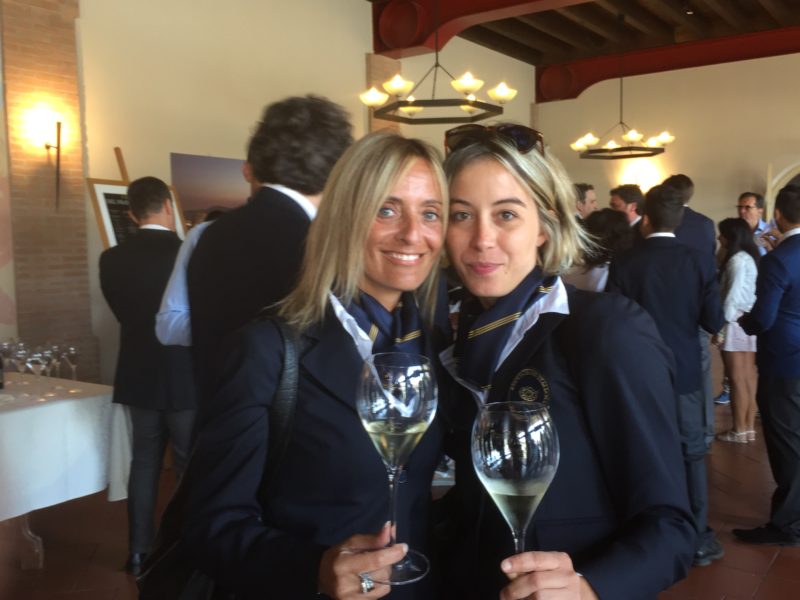
Let’s go to an amazing wine tasting called ‘Terre di Toscana 2019’, which was organized by ‘ Acqua Buona Association’It took place on 3rd  March 2019 at  the  ‘Una Hotel’  in Camaiore. Follow me! You will discover new and unforgettable wine labels of Tuscany !

134 top Tuscan wineries at ‘Terre di Toscana 2019’

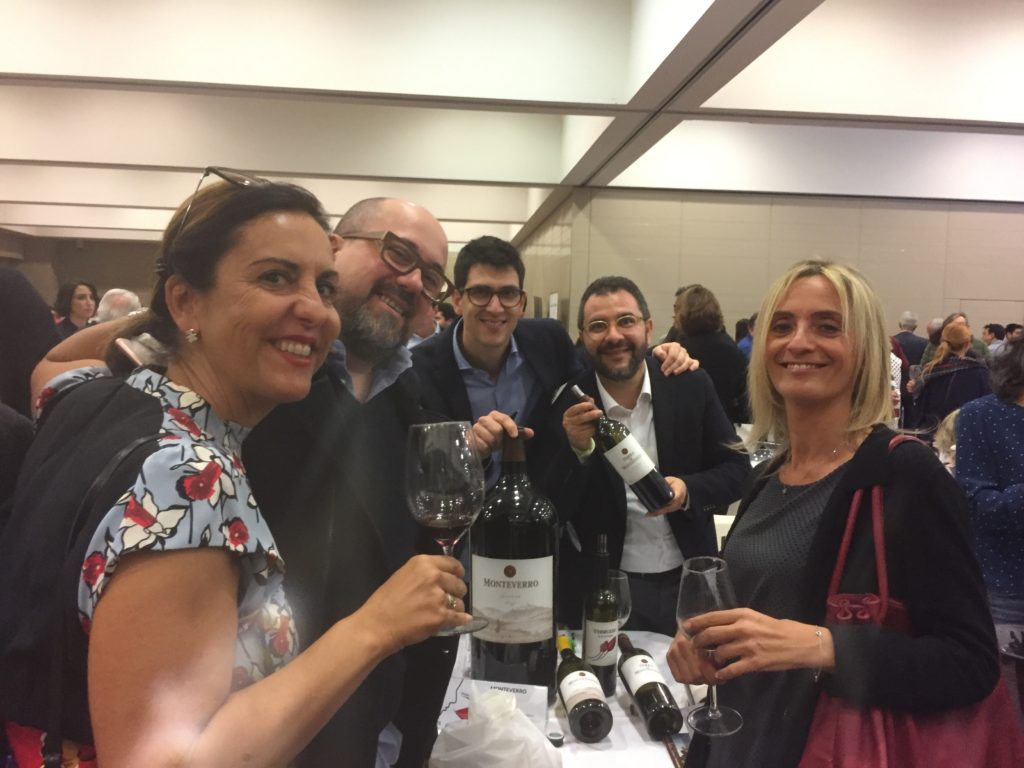
‘Terre di Toscana 2019 ‘ was a very important event for learning more about Tuscan wines . Over 130 talented wine makers and producers gathered up at this incredible eventfor two  days . They  showcased their wines to trade and wine lovers. The program of ‘Terre di Toscana 2019’ included the tasting of local products, such as: cheese, ham, sausages and pastry. There were cooking shows too. Here the list of all the most prestigious Tuscan wineries of ‘Terre di Toscana 2019’

  1. Amerighi Stefano;
  2. Argentiera
  3. Argiano
  4. Avignonesi
  5. Badia a Coltibuono
  6. Banfi
  7. Baracchi
  8. Beconcini Pietro Agricola
  9. Bertani Domains
  10. Bibbiano
  11. Bindella
  12. Boscarelli
  13. Caiarossa
  14. Antonio Camillo
  15. Campo alla Sughera
  16. Canalicchio di Sopra
  17. Capannelle
  18. Caparsa
  19. Capezzana
  20. Capitoni Marco
  21. Castellari Isola del Giglio
  22. Castell’in Villa
  23. Castello dei Rampolla
  24. Castello di Albola
  25. Castello di Monsanto
  26. Castello di Potentino
  27. Castello di Ripa d’Orcia
  28. Castello di Volpaia
  29. Chiappini
  30. Cigliano
  31. Cinciano
  32. Col di Bacche
  33. Colle Santa Mustiola
  34. ColleMassari
  35. Compagnia del Vino
  36. Contucci
  37. Corzano e Paterno
  38. Cuna di Federico Staderini
  39. Fabrizio Dionisio
  40. Famiglia Cecchi
  41. Fattoi
  42. Fattoria Ambra
  43. Fattoria dei Barbi
  44. Fattoria del Cerro-La Poderina-Tenuta di Monterufoli
  45. Fattoria di Magliano
  46. Fattoria Kappa
  47. Fattoria Le Pupille
  48. Fattoria Montellori
  49. Fattoria Varramista
  50. Fèlsina
  51. Fontodi
  52. Fornacelle
  53. Fortulla
  54. Franco Pacenti – Canalicchio
  55. Fuligni
  56. Gianni Brunelli
  57. Giardini Ripadiversilia
  58. Grattamacco
  59. I Luoghi
  60. Il Borghetto
  61. Il Colombaio di Santa Chiara
  62. Il Marroneto
  63. Il Rio
  64. Istine
  65. La Cerbaiola – Salvioni
  66. La Fralluca
  67. La Gerla
  68. Le Chiuse
  69. Le Cinciole
  70. Le Macchiole
  71. Le Potazzine
  72. Le Ragnaie
  73. L’Erta di Radda
  74. Lisini
  75. Mastrojanni
  76. Monte Bernardi
  77. Montepeloso
  78. Montepepe
  79. Monteraponi
  80. Montevertine
  81. Monteverro
  82. Oliviero Toscani
  83. Orma
  84. Poggio al Lupo
  85. Tenuta Sette Ponti
  86. Panizzi
  87. Petra
  88. Petrolo
  89. Piaggia
  90. Pietroso
  91. Pieve de’ Pitti
  92. Pieve Santo Stefano
  93. Podere Bellosguardo
  94. Podere Fedespina
  95. Podere Fortuna
  96. Podere Il Carnasciale
  97. Podere Marcampo
  98. Podere Ristella
  99. Podere Sant’Agnese
  100. Poggerino
  101. Poggio al Sole
  102. Poggio al Tesoro
  103. Poggio di Sotto
  104. Querciabella
  105. Ricasoli
  106. Riecine
  107. Rocca delle Macìe
  108. Rocca di Castagnoli – Capraia
  109. Rocca di Montegrossi
  110. Roccapesta
  111. Rubbia al Colle
  112. Salcheto
  113. San Giusto a Rentennano
  114. Sanlorenzo
  115. Sator
  116. Satta Michele
  117. Sesti
  118. Solatione
  119. Tenimenti D’Alessandro
  120. Tenuta Col d’Orcia
  121. Tenuta degli Dei
  122. Tenuta del Buonamico
  123. Tenuta di Carleone
  124. Tenuta di Sesta
  125. Tenuta La Massa
  126. Tenuta Lenzini
  127. Tenuta Mariani
  128. Tenuta Monteti
  129. Tenuta San Guido
  130. Terenzi
  131. Teruzzi
  132. Tiezzi Poderi Soccorso e Cerrino
  133. Vecchie Terre di Montefìli
  134. Villa Calcinaia

terre-di-toscana-2019-wine-travel-blog-weloveitalyeu

‘Terre di Toscana 2019’, a perfect  place for wine lovers and experts!

‘Terre di Toscana 2019’  was  dedicated to people who love wine. It is a good possibility for improving your  knowledge about Tuscan wines.  ‘Terre di Toscana 2019’   is not only about enjoying a glass or two with some good grub, but it’s also a chance to wet your palate and stock up on the region’s best established and up-and-coming vintages. Here below  my favourite wines.

terre-di-toscana-2019-wine-travel-blog-weloveitalyeu

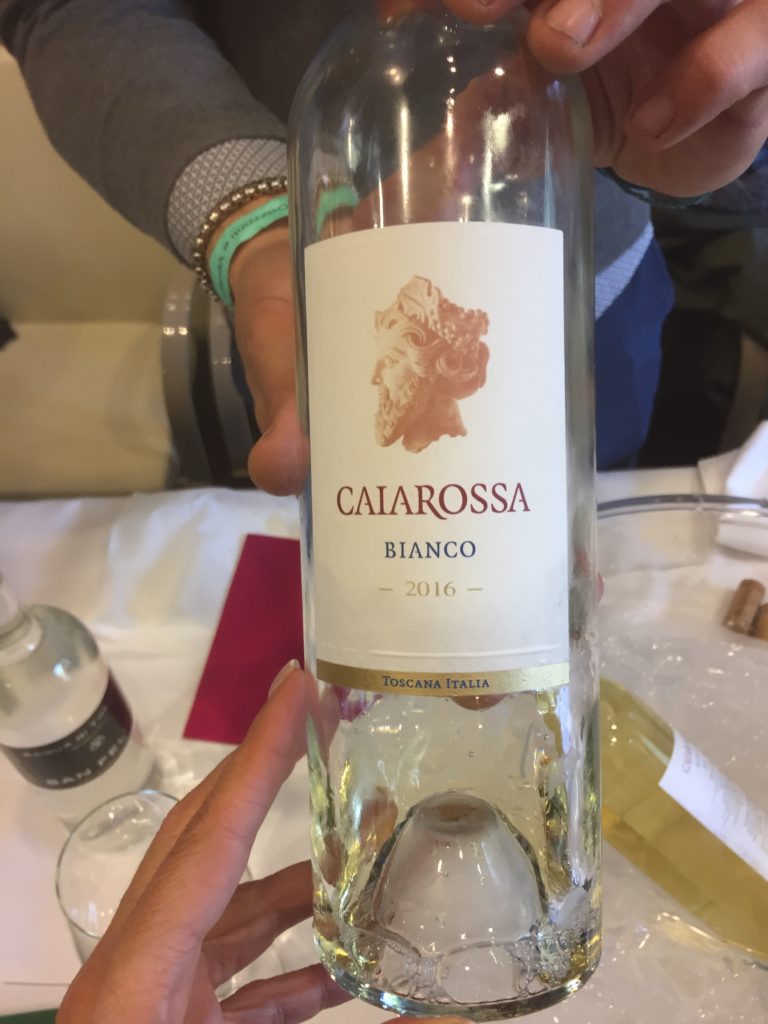
‘Caiarossa Bianco 2016’  at ‘Terre di Toscana 2019’

‘Caiarossa Bianco 2016′  is an elegant and balanced white wine. It is an expression of both varietal Viognier and Chardonnay cultivated on the most chalky terroir of the estate. The name of Caiarossa’ was coined as a homage to the soil, which is characterized by the presence of jasper, rock and pebbles , whic are intensely red in color. The  history  of  Caiarossa winery began in 1998. Its  production principles are based on organic agriculture as regard the  cultivation of the vineyards .

terre-di-toscana-2019-wine-travel-blog-weloveitalyeu

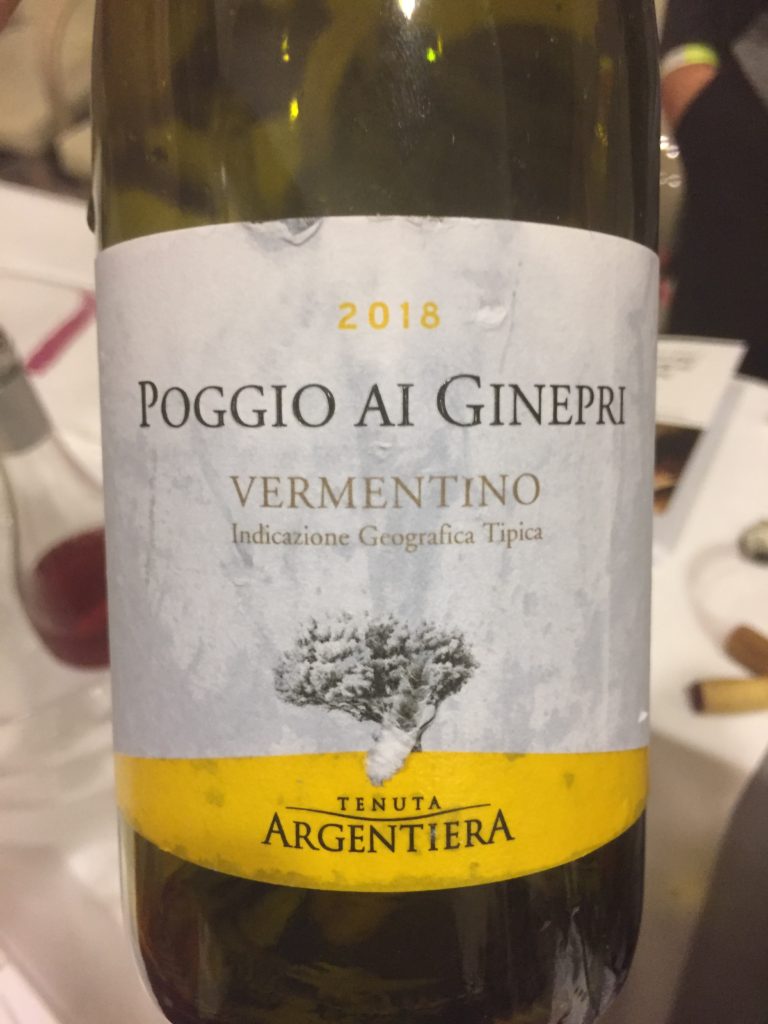
‘Poggio ai Ginepri Vermentino 2016 Argentiera’ at ‘Terre di Toscana 2019’

‘Poggio ai Ginepri Vermentino 2016, Argentiera  is an elegant and fruity white wine. It is  made from Vermentino 90% and Sauvignon Blanc 10%. It has an  intense straw yellow color. It is fresh on the nose with fruit-forward notes of pear, banana and apricot. On the palate, it has floral tones of lavender and white flowers . On the palate, It’s  fresh and easy drinking. A long, flavourful finish is pronounced by aromatics and definitive minerality.

<iframe width="560" height="315" src="https://www.youtube.com/embed/z2fvwj-IX-s" title="YouTube video player" frameborder="0" allow="accelerometer; autoplay; clipboard-write; encrypted-media; gyroscope; picture-in-picture; web-share" allowfullscreen></iframe>

‘Sassicaia 2016’ at ‘Terre di Toscana 2019’

‘Sassicaia 2016 is an important and legendary wine made in ‘Tenuta San Guido’, a place near Bolgheri. It’s a Bordeaux blend, which is  aged for 24 months in barrique. It’s very  intense, and  rich of herbaceous and mineral aromas. You fine notes of wild fruits and graphite. It has a  soft and robust character, and embodies  the real essence of the super tuscan wines.

terre-di-toscana-2019-wine-travel-blog-weloveitalyeu

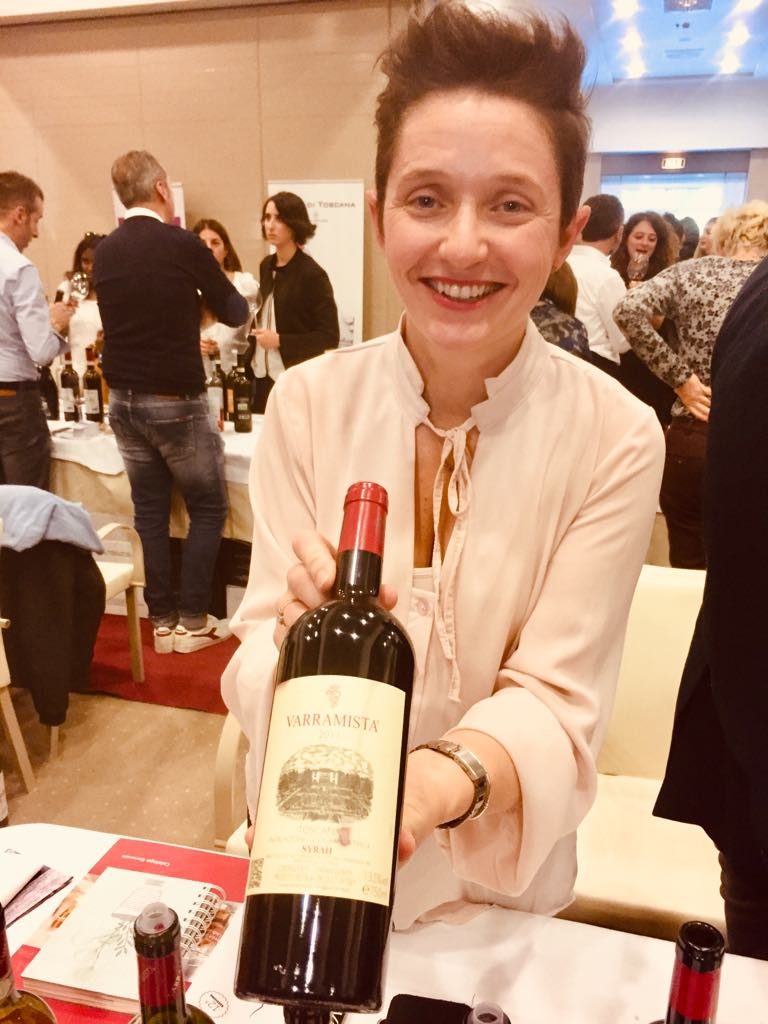
‘Sterpato 2015 Varramista’ at ‘Terre di Toscana 2019’

‘Sterpato 2015,  Varramista’   is a ruby red wine of medium intensity. It is made from Sangiovese 80%, Merlot 10%, and Cabernet 10%. To the nose It presents fruity and slightly spicy notes reminiscent of wild berries. The flavour is smooth, lively, easy to drink, well-balanced, persistent.

terre-di-toscana-2019-wine-travel-blog-weloveitalyeu

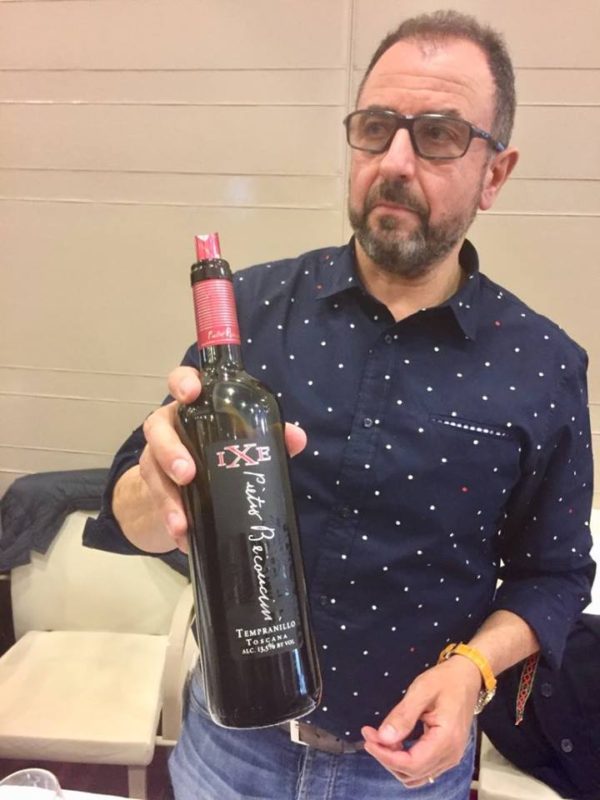
‘Ixe Pietro Beconcino Tempranillo’ at ‘Terre di Toscana 2019’

‘Ixe Pietro Beconcini Tempranillo’  is  a fantastic Italian  version of the Spanish grape called Tempranillo . It is able to grow in San Miniato. The extraordinary adaptation of these vines to this part of Tuscany gives birth to a unique and generous red wine. It’s a fruity and mineral red wine.

terre-di-toscana-2019-wine-travel-blog-weloveitalyeu

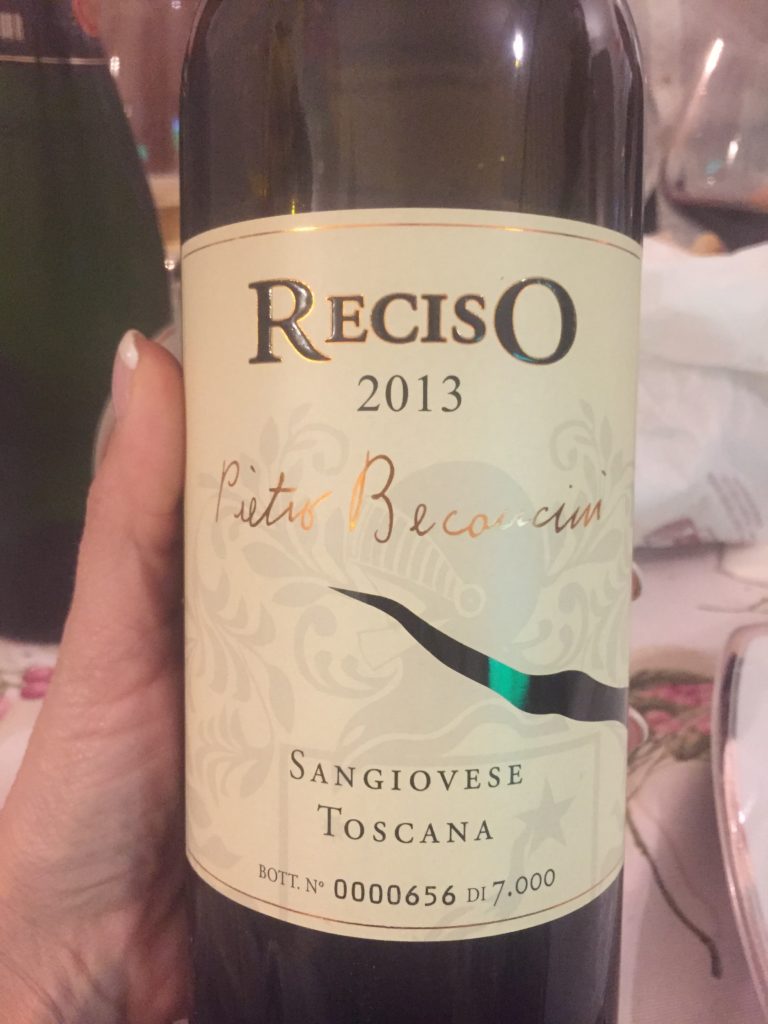
‘Reciso 2013 Pietro Beconcini’ at ‘Terre di Toscana 2019’

‘Reciso 2013 Pietro Beconcini’  is a super tuscan.  Specifically  it is a red wine made from Sangiovese, which is produced in very limited quantities. It’s a ruby and intense red wine.

terre-di-toscana-2019-wine-travel-blog-weloveitalyeu

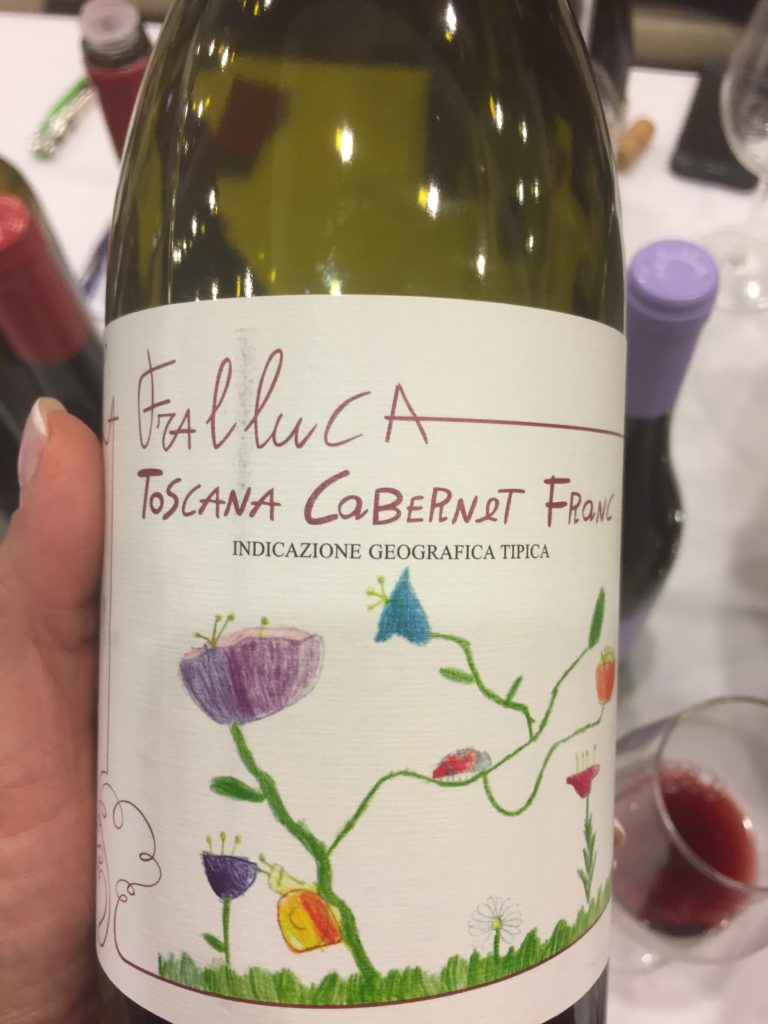
‘Falluca Cabernet Franc’  at ‘Terre di Toscana 2019’

‘Falluca Cabernet Franc’ is a great wine to satisfy the most discerning palates. It has a dual personality: complex and deep. It reveals hints of red fruits like black currant, strawberry and raspberry . It is fine , elegant , and displays all the best characteristics of the grape of  our territory. We like drinking  it slowly, because it changes every time, glass after glass.

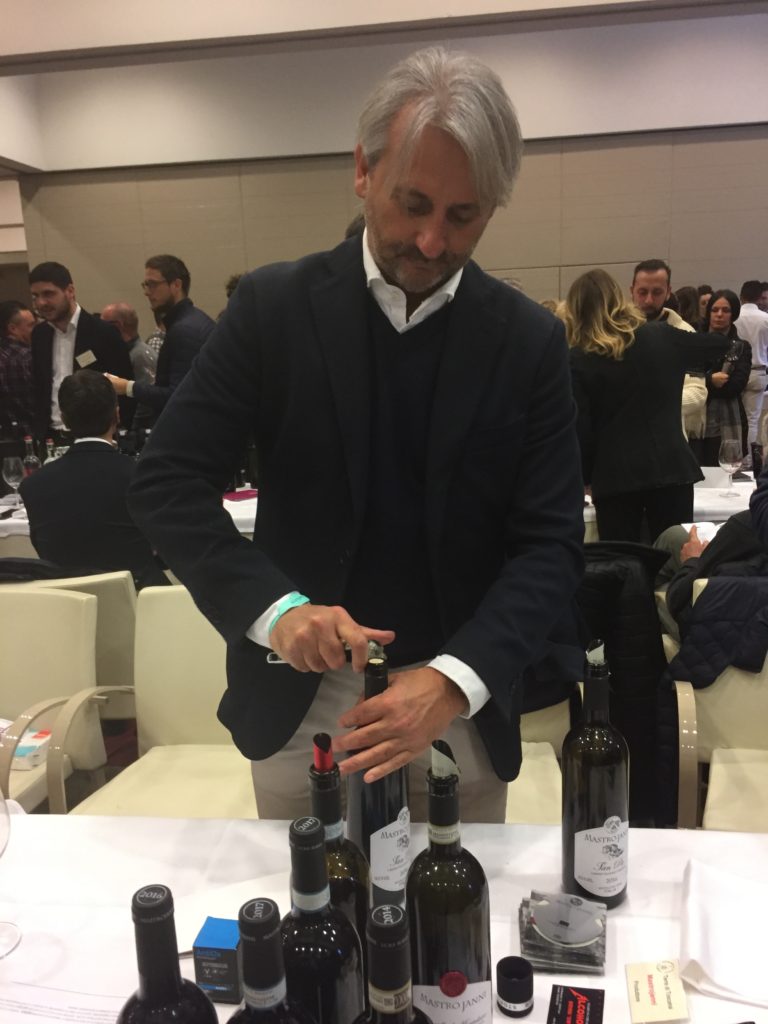
‘Mastro Janni 2014, 2016, 2017’  at ‘Terre di Toscana 2019’

‘Mastro Janni 2014, 2016, 2017 is  the  good thermal excursions of the year 2013, combined with the pebble and the tuff of ‘Vigna Loreto’, having allowed the local Sangiovese to express itself with personality and elegance. Always balanced between strength and refinement, this Brunello is defined by an intriguing succession of notes of fruit, sweet spices and tobacco.

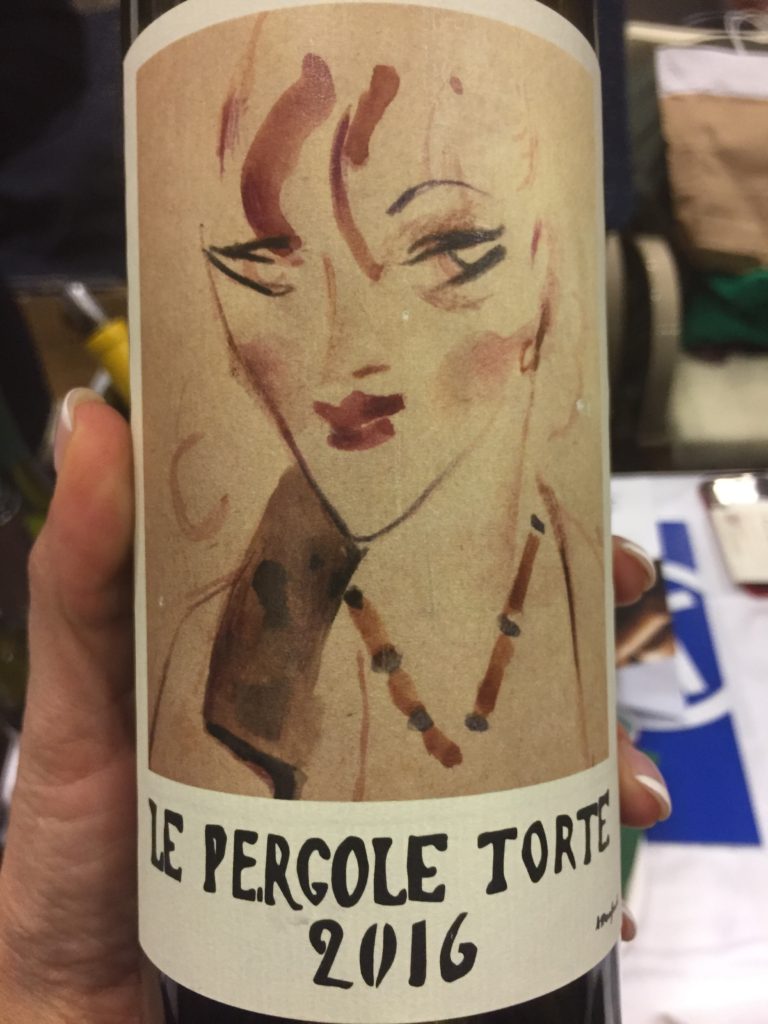
‘Le Pergole  Torte’ 2016 at ‘Terre di Toscana 2019’

‘Le Pergole  Torte 2016’ is  one of the most prestigious red wine made from 100% Sangiovese in Tuscany.  It is aged for about 12 months in Slavonian oak barrels and for about 12 months in allier barriques. It s a red wine with a long history . It reminds us of  blackberry,  cherry, chocolate,  and tobacco smooth, complex, and elegant attack, with intense notes of black berries, ripe tannins, lovely acidity over a long finish.

If you like my post, please subscribe to the socials of www.WeLoveitaly.eu :