
Chi è Roberto Cipresso? È l’arte di fare il vino a Montalcino

Chi è Roberto Cipresso? È l’arte di fare il vino a Montalcino

“L’arte è un punto di vista e un modo geniale di guardare le cose.”

Henry James

Roberto Cipresso. L’arte di fare vino a Montalcino.

Un  weekend  di Settembre mi sono recata a Montalcino  a  ‘Poggio al Sole’  , resort stellato di Roberto Cipresso  , enologo di fama internazionale. Ho avuto l’occasione di conoscerlo meglio nel suo  eden e assaggiando il suo oro rosso, ossia il Brunello,  uno dei vini più conosciuti al mondo.

Senza dubbio, la mia è stata  un’esperienza che vi metterà di fronte all’evoluzione dell’imprenditoria agricola in Toscana. Certamente essa affonda le radici nella tradizione, ma è decisamente proiettata verso il futuro dell’innovazione.

E non a caso vi parlerò delle novità nella cantina di Roberto Cipresso , il cui sguardo non segna mai un confine, ma si apre ogni volta ad un orizzonte nuovo. Per cui, sedetevi pure comodi e cercate di seguire Roberto Cipresso   attraverso il mio racconto, perché non è facile stargli dietro!
Roberto-Cipresso-The- Secret -Novel

Il primo incontro con Roberto Cipresso

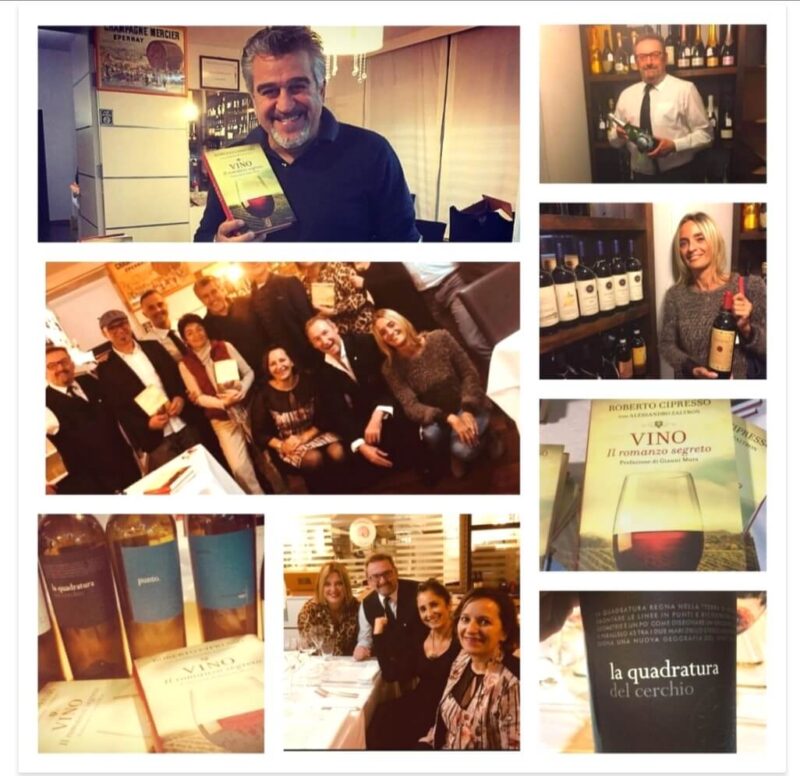
L’ 08 Novembre del 2018 è una data memorabile per me. Fu allora che incontrai infatti per la prima volta  Roberto Cipresso . Ero stata invitata con altri sommelier a una cena a sorpresa  con degustazione di vini al  ristorante ‘Nautilus’ di Andrea Baldeschi  a Tirrenia, Pisa. Si trattava dei vini di  Roberto Cipresso  abbinati a dei piatti di cucina tradizionale toscana. In quell’occasione l’eclettico winemaker presentò anche il suo libro  ‘Il Romanzo Segreto’  .

In questo mio post  scoprirete con il mio articolo il motivo del successo di Roberto Cipresso  ,  che  risiede nel connubio tra un’eccellente preparazione accademica e una prorompente personalità. Roberto Cipresso  rivoluziona tutto ciò che ordinario, si mette in gioco quotidianamente, poiché la sua curiosità lo spinge a vedere castelli laddove gli altri vedono ruderi!

‘Poggio al Sole’, il buen ritiro di Roberto Cipresso

Così un venerdì mattina sono partita in treno da Pisa direzione Montalcino, per conoscere da vicino e intervistare  Roberto Cipresso. Dal treno sono scesa alla fermata di  Buonconvento . Qui mi è venuto a prendere in macchina  Fabio degli Stefani, braccio destro di  Roberto Cipresso. 

Dopo qualche minuto con Fabio degli Stefani abbiamo percorso con la sua Fiat grigia  un viale di cipressi alti e fieri , che ci hanno portato dritti al cancello di ‘Poggio al Sole’ . 

‘Poggio al Sole’ è l’ incantevole agriturismo di Roberto Cipresso , che si estende  per  due ettari per lo più coltivati a Brunello  in località Torrenieri. Si tratta di uno spettacolare  wine relais posto  tra la Val d’Orcia e il Monte Amiata.

‘Poggio al Sole’ è un vecchio rudere del 1700 trasformato nel 1996 in un elegante casa vacanza di campagna  in perfetto stile toscano. Immerso in una vegetazione dolce e avvolgente tra l’Abbazia di Sant’Antimo (VIII secolo), Castelnuovo Abate e Sant’Angelo in Colle , ‘Poggio al Sole’ dispone di cinque appartamenti a pietra viva , dotati di tutti i comfort di ultima generazione.

Il mio loft a ‘Poggio al Sole’

Ho davvero trascorso un fine settimana indimenticabile a ‘Poggio al Sole’  nella pace del creato, tra i piaceri del cibo,  del vino, e della buona compagnia di Roberto Cipresso.  Ho proprio staccato un biglietto per la prima fila di uno spettacolo di una natura rigogliosa e silenziosa tra filari di vite e  panorami mozzafiato.

La mia stanza era un elegante e comodo loft a pianterreno di ‘Poggio al Sole’  . Quando mi ero affacciata da una finestra interna, vedendo  i colori del tramonto che  pennellavano di arancione le pareti del casale.

Tutto intorno sentivo  profumi di lavanda, ginestra e rosmarino, che invadevano il pergolato. Mi ero goduta appieno  il mio soggiorno, rinfrescandomi con una doccia e rilassandomi nel mio morbido  letto in soffitta.

Mi fecero compagnia Briciola il gatto, e le cicale, che intonarono un canto, salutando l’estate che intanto andava via. A volte bisogna  ricordare che basta davvero poco per rigenerarsi, e la Toscana di Roberto Cipresso è un all inclusive di sensazioni, che difficilmente si possono provare altrove .

Chi è Roberto Cipresso? Winemaker eclettico , blend perfetto di razionalità e sentimento. 

Classe 1963, Roberto Cipresso  nasce a Bassano del Grappa , ma l’uva da giovane non gli interessa affatto. Non solo! Inizialmente la sua vera passione è l’alpinismo. Pensate che Roberto Cipresso   studia volentieri agronomia a Padova per stare più vicino alle vette da scalare!  Roberto Cipresso   doma saggiamente questa sua forma di irrequietezza giovanile. Perché se da un lato la scuola lo disturba, dall’altro è consapevole della sua importanza per dare un solido fondamento alla sua carriera.

In tutta sincerità, Roberto Cipresso è sempre stato un montanaro, e in cima alle Dolomiti impara più che tra i banchi. Cosa? La capacità di oltrepassare i propri limiti, le proprie paure, di scegliere la cosa più logica, perché si sa in fondo fino a dove ci si può spingere!

La perdita di un amico e l’addio alla montagna

Il potere senza la mente, serve a ben poco. Per quanto capaci , siamo sempre esseri umani, macchine perfette , ma non infallibili. E questo Roberto Cipresso l’ha imparato a proprie spese, dopo essere rimasto miracolosamente illeso a causa di una caduta di 80 metri dal Cividale, e la tragica perdita di un amico fraterno!

Così Roberto Cipresso si prende una pausa dai bollori interni, e  decide di conseguire un master presso l’ ‘Istituto di San Michele all’Adige’. Da qui sono usciti fuori numeri uno nel settore vinicolo con la direzione del celebre Professor Attilio Scienza, guru dell’enologia italiana. Roberto Cipresso  non rinuncia a fantasticare, cambia solo rotta, facendo presto parte di quella nicchia di winemakers da rivista platinata.

Roberto Cipresso si descrive nel suo ‘Il Romanzo del Vino’ 

Eppure Roberto Cipresso è rimasto lo stesso ragazzo di prima, come si descrive nel suo libro ‘Il Romanzo del Vino’ :

“Da giovane ero già tutto quello che sono oggi. Ballavo poco e male. Suonavo la chitarra con passione. Il mio fumetto era ‘Alan Ford’’. Il Libro con la maiuscola era e resta ‘Lo Straniero di Camus’, ma non potevo certo scappare a ‘Siddharta’ e ‘L’Alchimista’.

Per completare il quadro dirò che mi sono commosso con ‘L’Attimo Fuggente’ e ‘Schindler’s List’, la grande sfida versione cinema è ‘Duel’, l’incanto formato pellicola è ‘Il Color Viola’, un grande attore è De Niro ma restano indimenticabili Giannini e la Melato nel film di quella che sarebbe diventata anche la mia amica Lina Wertmüller, il cantante del cuore è James Taylor, la grande trasmissione è ‘Blob’, per quanta TV vedo, e il comico è Benigni…”.

Dal Veneto alla Toscana. Nulla è per caso!

Il concorso vinto da ranger è un lontano ricordo per Roberto . Appena venticinquenne, si trasferisce definitivamente a Montalcino, che stravolge in meglio la sua esistenza, diventando il posto della memoria. Casualità, destino? Poco davvero importa, perché dal 1988 al 1996, Roberto lavora presso importanti cantine a Montalcino,  quali ‘ Soldera Case Basse’ , ‘Poggio Antico’ e ‘Ciacci Piccolomini d’Aragona’.

Inevitabilmente Roberto mette su famiglia a  Montalcino  , sposando Marina Fiorani , proprietaria del rinomato ristorante ‘Il Boccone Divino’ . Parallelamente nel 1955 con i campioni del rally Miki Biason e Tiziano Siviero,  e altri personaggi illustri,  Roberto   coofonda  ‘La Fiorita’, una azienda vinicola, che  cresce fino a toccare i nove ettari di superfice vitata.

Poggio al Sole, wine relais a Montalcino
‘Poggio al Sole’, wine relais a Montalcino

Roberto Cipresso, un visionario e un uomo dal cuore d’oro

Roberto Cipresso non è solo un professionista del settore enoico, è in primis un visionario con un cuore a prova di oceano. Lui è un globe trotter, capace di stare tanto accanto ai re quanto ai poveri, restando pur sempre se stesso, con tutta la sua straordinaria semplicità.

Quello che più mi conquista di Roberto  è la sua umanità, quello che più ammiro è l’arte del delegare. Mi ha dato fiducia, e quindi la possibilità di approfondire la mia formazione da sommelier. Mi ha spedito un po’ ovunque per lo stivale per documentare il decollo di imprenditori di spicco,  a cui ha fatto da mentore, che si sono lanciati nel vino per poi esplodere con il suo fidato appoggio.


If you like my blog, please subscribe to my channel here below


Fibbiano winery and the wines of the hills of Pisa

Fibbiano winery and the wines of the hills of Pisa

‘A bottle of wine contains more philosophy than all the books in the world’

Louis Pasteur

The wines of Pisa hills

If you’ve just booked  an holiday in the magic  Tuscany,  you’ll soon be wondering: “what wines should I drink when I’m there?”. Surely,  one can answer  the wines of  ‘Chianti’ !

The wines of ‘ Chianti’ are really popular indeed. They come from the valleys between the great Tuscan Renaissance cities of Siena and Florence . Exactly here for a thousand years the landscape is made up of an unchanged medieval tapestry of woodlands, olive groves and cypress trees, all guarded by magnificent aristocratic villas.

What you should  know is that    Tuscany boasts other different and dynamic zones. One of these is for example  the rolling hills of Pisa and its province, namely the  ‘Terre di Pisa D.O.C.’ , which was founded in 2011!

Since then,  15 wineries have been enhancing  the quality of the wine production of Pisa and its province, promoting the wine appellations of ‘ Terre di Pisa Sangiovese‘ and ‘Terre di Pisa Rosso’  in the international markets.

‘Terre di Pisa’ , a new project for a better tourism in Pisa

On the 6th December 2018 I attended a conference press at  the ‘Chamber of Commerce of Pisa’. It was hold in order to launch the project of ‘Terre di Pisa‘  . What about it? It’ is the new tourist brand  for promoting  the cultural heritage  of  Pisa and its wine making tradition .  It counts about 460 members, including  ‘WeLoveItaly.eu’ as well!

On that occasion, I met Nicola Cantoni , the moderator of that event. Nicola has a handshake you remember. One quickly understands Nicola as a winemaker committed to what is important in the Tuscan winemaking tradition. But guess what!

Nicola is the owner of ‘Fibbiano winery”‘, which belongs to the 15 wineries  representing the excellence of wines produced in the territory of Pisa and its province . In a word, Nicola invited me to visit his winery, giving me the possibility to experience the renaissance of the wine  of  Pisa and its province. Thus I will be always  grateful for that!

‘Consortium  of the wines of Pisa’, an important wine community of Pisa and its province

While attending the press conference about ‘Terre di Pisa‘,  I found out that Nicola is not only a talented winemaker , but also  president of the  ‘Consortium  of the wines of Pisa’ .  This  wine committee  was founded in 2018 to :

With the sunny season approaching fast, It was time for me  to plan my visit  at ‘Fibbiano winery’. But, It was quite impossible to fix a date for me  with  Nicola , being always busy for his job  ! Suddenly, his brother  Matteo Cantoni was the perfect solution to the problem! Fortunately, Matteo  was free to welcome me at ‘Fibbiano winery’   with open arms!

‘Fibbiano Winery’. How to make high quality wines in Pisa and its province

Lucky me! During a a weekend in March, I decided to came up at ‘Fibbiano winery’, which is home to  a terrific  modern winery and  an enchanting farmhouse. This enchanting estate is located at n. 2 via Fibbiano , in the municipality of Terricciola. This is a stunning  part of Tuscany, which is called the Era Valley (between  Pisa and Volterra). This enchanting territory is fast becoming an essential reference point for Tuscan wine, indeed for Italian wine. 

As I arrived at ‘Fibbiano winery‘  Matteo  greeted me with a friendly smile . To begin with, Matteo was very kind with me. I had my interview with him about his farmhouse together with an exclusive wine tasting of their best wine labels. First Matteo told me all about the history of his family. 

Then I visited the cellar and the vineyards of the ‘Fibbiano winery‘. Finally,  I had my great wine tasting in a enchanting wine cellar.

The history of  ‘Fibbiano winery’ 

In 1997 Giuseppe Cantoni, with his wife Tiziana and sons Matteo and Nicola, moved from  Lombardy to Tuscany. They were looking for  a successful  wine making business living a life far away from the noise of the city and close to nature.

Therefore, they purchased a  medieval villa at that time, that belonged to the noble family Gherardi del Testa Barasaglia in the 12th century . They  renovated it all and turned it into what ‘Fibbiano winery‘  is today, a thriving agricultural entrepreneurship.

An adventure from the North to the South

Their adventure from North Italy in Tuscany  was not only the result of a  desire to search for  their el dorado, but  also  a sign of destiny printed in one of their first  label ‘Fonte delle Donne’  .  This exquisite white wine is made from Colombana, an old grape that grew spontaneously around a miraculous water source near the estate.

According to tradition, the Colombana grape was introduced by San Columbanus ‘ followers in the 17th century , when these famous Irish abbots decided to settle here living behind their Milan area. Upon their arrival in their estate, Cantoni Family realized they were not the only foreigners who fell  in love with Tuscany,  finding  the right place where to be !

Bringing to light  the old farmstead was not easy, but all that work  devoted to transform an old ruin into a jewellery was fully rewarded, as Cantoni Family carries on a prospering farming activity today, respecting land and the local traditions. Giuseppe, the father, deals with the general management of the middle age estate and takes care of the vineyards and countryside. Matteo, the eldest of the two sons, is in charge of marketing the wines and his brother, Nicola, is the winemaker .

The grapes of ‘Fibbiano winery’

Fibbiano’s philosophy is to continue on this thread of culture and tradition, cultivating indigenous grape varieties, such as Sangiovese, Canaiolo, Ciliegiolo, Colorino,  S. Colombana, and Vermentino ,  instead of more international grapes. Fattoria di Fibbiano extends over an area of about 20 hectares of vineyards, 5 hectares of olive groves, 12 hectares of woodland and the rest is arable land.

Some vineyards (around 2.5 hectares) are over 100 years old and 17.5 hectares are up to 20 years old. This  mixture of old vines and new vines  keeps the vineyard alive, with red grapes planted on the top of the hill, and white grapes on the lower parts.  Due to Fibbiano‘s proximity to the Mediterranean and Ligurian seas, the soil originates from the sea and is rich in fossil shells from the pliocene epoch, and medium-textured corals .

In terms of climate, this part of Tuscany has warm sea breezes during the day and cooler nights, which helps the grapes to retain acidity and develop flavour. This particular terroir provides to complex wines with a certain minerality,  and aging capability.

‘Fibbiano winery’ is green!

I appreciated a lot of things, above all that ‘Fibbiano winery‘   is certified organic. Their practices, farming and wine-growing methods are truly natural. They even use  their own wood for central heating. Further, this sustainable winery uses a solar plant to conserve energy and produce fresh water.

They are always ready  to face new challenges, not least of which  exporting 80% of their wine to the following countries: United States, Canada, Norway, Ireland, Germany, Austria, Switzerland, China, Russia, Malaysia, Singapore, Japan, Taiwan, Lebanon, Mexico.

The wines of ‘Fibbiano winery’

The best part of this incredible life experience was my top wine tasting. I was led to a lovely wine bar with a large wooden table full with  Fibbiano  Best Wines and platters of Tuscan salami, pecorino and bread.  I sampled 6 different Wines, guided by Matteo who talked me through what I was enjoying, from the colour/appearance, the bouquet/smell and then the flavour.

Each wine was different, but wonderful in its own way.  I tried red and white wines, but the majority of the ones I  tried were red. Most of them are  made from the Sangiovese grapes and some are mixed with other grapes to produce  new fantastic blends.

White and rosé

Red wines

  • ‘Le Pianette IGT Toscana’ : This is a 70% Sangiovese and 30% Colorino wine;  It  is aged for 6 months in barrels of Slavonian oak and 3 months in bottle;
  • ‘Casalini Chianti Superiore DOCG’ : This is an 80% Sangiovese and 20% Ciliegiolo wine. It is aged for 8 months in barrels of Slavonian oak and 3 months in bottle. It has the typical notes of cherry . It is  a well-structured wine with smooth tannins;
  • ‘Aspetto IGT Toscana’ :  This is a 50% Sangiovese and 50% Canaiolo wine. It is aged for 12 months in tonneaux, 6 months in cement tanks, and 6 months in bottle. This is an intense ruby red wine with notes of mature red fruit and spices;
  • ‘Ceppatella IGT Toscana’ : This is a 100% Sangiovese wine, which is made with grapes selected from the oldest vineyard of the estate – it’s a 120 years old vineyard . It is a wine aged for 6 months in tonneaux , 14 months in barrels of Slavonian oak, and 5 months in bottle. It has notes of marmalade, spices, tobacco, and cacao and a long persistence.

Matteo entertained me happily and answered all my questions  by sharing  the secrets of their quality wines: “Sun, soil and patience”!

The wine of Pisa hills

‘Fibbiano winery‘ offers up a bunch of very tasty wines for wine lovers and experts to experience. It is situated predominantly in the wine trail of the Pisa hills, an itinerary through the Tuscan countryside, which highlights many small towns that boast great traditions. It’s an area between Pisa and Volterra, and it  extends in the vicinity of the Arno, Egola and Elsa rivers. It embraces  stunning landscapes and places, such as  Casciana Terme, Capannoli, Chianni, Crespina, Lari, Palaia, Ponsacco, Terricciola, Cascina, Collesalvetti, Fauglia, Laiatico, Lorenzana, Montopoli Valdarno, Peccioli, Pontedera, Santa Luce, San Miniato and Collesalvetti .

The rolling hills of Pisa  gives birth to top red & white wines:

‘Fibbiano winery’ ,  the essence of the wine tradition in Pisa

Like other talented wine producers within  this zone , ‘Fibbiano winery’ is an example  of Pisa’s great winemaking potential, that is  only to be revealed in all its splendour.  I am feeling optimistic that this area is set to receive long overdue attention. Matteo was an excellent guide and wine educator

It was so natural for him to explain all that concerned his farm and how wine is made from grapes to wine. His passionate wine tasting remains for a long time among my memory . I am eager  to learn much more about the super wines of Pisa, that’s why another visit to ‘Fibbiano winery’ will be a must!

If you like my post, please subscribe to the socials of www.WeLoveitaly.eu :


‘Vinoè 2018’ , Florence

‘Vinoè 2018’ , Florence

“One should always be drunk. That’s all that matters…But with what? With wine, with poetry, or with virtue, as you chose. But get drunk.”
Charles Baudelaire

“Vinoè 2018” , a stunning wine exihibition in Florence

“Vinoè 2018” is an event in Florence, which is  dedicated to Italian and international wine wxcellence . Now it is in its third edition and is  organized by ‘FISAR’ (‘Italian Federation of Hotel and Catering Sommeliers’). There are not only exihibitors with their best bottles of white, sparkling, rosé and red wines, but also cooking shows .

15 reasons to go to “Vinoè 2018”,  in Florence

“Vinoè 2018” is a meeting point for wine lovers and expetrs.  It is possible in 3 days  to discover:

  1. 800 wine labels, among the famous and less famous wineries;
  2. 140 tasting counters, chaired by winemakers, providing a special glimpse of  national  and international  wine making tradition;
  3. Wine roducers from all over Italy, from the North to the South; in particular there will be a wide representation of Tuscany with its Brunello di Montalcino. This is a red DOCG Italian wine produced in the vineyards surrounding the town of Montalcino , which is located about 80 km South of Florence in the Tuscany Wine region;
  4. The great  ine excellence from beyond the Alps;
  5. An interesting debate about reduction and replacement of sulphites in wine launched by  Carlos Veloso dos Santos , CEO of “Amorim”; 
  6. The art of asting chocolate, grapes & distillates with a special workshop presented by Paolo Bini, whois a distillate expert;
  7. The secrets of winemaking in anfora from ancient to modern time with a seminar dedicated on this issue , a meeting whose speaker is the oenologist Francesco Bartoletti;
  8.  The terroir of Burgundy with the vertical tasting of “Vosne Romanée Clos des Réas 1er Cru” (Pinot Noir in purity produced between 2011 and 2015);
  9. A masterclass dedicated to champagne vintages led by Cristina Willemsen of  “Fier Ce Fit”;
  10. A vertical tasting of “Lauro Costa Toscana IGT Podere la Regola”,  and of “Brunello Montalcino Castello Banfi” ;
  11. Food and wine culture of eastern countries, the origins and rituals of  Sakè (a Japanese drink that is made by fermenting rice) told by Giovanni Baldini of “Firenze Sakè” and by “Arimitsu Sake Brewery” ;
  12. A professional talk about the physico-chemical composition or the organoleptic  characteristics of the wine by Monica Picchi, teacher at “Agrarian Faculty of the University of Florence”; 
  13. A journey around the world of the women entrepreneurs in the field of wine making moderated by the sommelier  Genni Setteducati;
  14. Emanuele Costantini, the best “FISAR” , who earned a nomination for best sommelier  2018;
  15. Cooking classes with a pool of experts: Michelangelo Masoni, who is  a famous butcher of Viareggio;  Simone Alessio Sparacino, who is the chef at the starred  “CumQuibus” of San Gimignano; Francesco Secci, who is a member of the “Prato Deak Team”; the partners of ” Consorzio di Tutela del Vitellone Bianco dell’Appennino Centrale”, which is an Italian consortium for the protecion of native breeds, such as the Chianina  and the white veal from thecentral Apennines.

8 great Italian vines at “Vinoè 2018” 

“Vinoè 2018” is a really beautiful and inspiring experience. There are lots of visitors and I have the fantastic opportunity to taste high quality wine such as:
  1. “Tintilia (66)”, Claudio Cipressi, Molise;
  2. “Bianco di Mariagrazia”,Tenuta Benedetta Etna Bianco,  Sicily;
  3. “Tommaso Stellino”, Sicily;
  4. “Scalunera Etna Bianco”, Torre Mora/Piccini, Sicily/Tuscany;
  5. “Eleuteria”, Nerello Mascalese, Tenuta del Travale, Calabria;
  6. “Barolo”, Bruna Grimaldi, Piedmont;
  7. “Erbaluce”, Cieck, Piedmont;
  8. “Alta Langa”, Borgo Moncalvo, Piedmont.

3 great Italian wineries at “Vinoè 2018” 

Of course there are lot of wineries which deserve lot of attention, but I have selected three of them . They are located in the South of Italy .  The wines ofItaly’s southern wine districts are bold, full-bodied, and satisfying.

Southern Italy has been producing wine for over 4000 years. The wine business here was already booming in 2000 B.C. when the Phoenicians arrived. The Greeks dubbed southern Italy “The Land of Wine” and the Romans delighted in the wines of the Campania region.

In modern times, however, wine production in southern Italy has languished, and a large portion of wine produced there was sold to France and Germany as a blending wine. All that is changing!

Give a lokk to the rich and fine wine production of these wineries here above which are situated in Molise, Sicily, and Calabria. Have fun!

1. “Claudio Cipressi Winery”, Molise

“Claudio Cipressi Winery”, is located in San Felice del Molise, Campobasso. Since 2014 it has become officially certified as organic .  Moliseis a beautiful region with a unique landscape. It is largely uncontaminated and the vineyards have great potential, which is why Claudio Cipressi cultivates 16 hectares with enthusiasm. Claudio Cipressi has reintroduced the Tintilia,  a native white grape variety.

2. “Tenuta Mora Winery”, Sicily

“Tenuta Mora Winery“ is owned by the historic Tuscan producer “Tenute Piccini”, one of the most popular brand of Chianti, Chianti Classico, and Brunello Wines in Italy and the world. “Tenuta Mora Winery “ is a boutique winery located on the Etna volcano, a black mountain looking at a blue shining sea, a unique place able to craft hidden wine gems.

The two vineyards of “Tenuta Mora “ are located at about 650-700m in Contrada Rovittello, in the municipality of Castiglione di Sicilia and Contrada Torre, in the municipality of Linguaglossa. The philosophy of “Tenuta Mora Winery“ is one grape, one territory. Their main grapes are Nerello Mascalese and Nerello Cappuccio. The average age of vines sits at around 15 years old .

Vineyards on the Etna feature extremely fertile volcanic soils at an altitude of 650-700 meters above sea level (2100-2300 ft), with important temperature variations between day and night considerably influencing the quality of the grapes. Other properties under the Piccini umbrella are Valiano in Chianti Classico, Villa al Cortille in Montalcino, Tenuta Moraia in the Maremma Toscana, and Regio Cantinain the Aglianico del Vulture DOC zone of Basilicata.  They are passionate about Winemaking!

3. “Tenuta del Travale”, Cosenza

“Tenuta del Travale”  is located in Rovito, Cosenza, a thirty minute drive from the spectacular blue sea of the Tyrrhenian coast in Calabria. Calabria is a wine region waiting to be discovered. Calabrian Wine has not received the recognition it deserves, even though the region of Calabria has a very long history of vine cultivation. The territory is gorgeous, but the economic problems of the region have prevented it from achieving its full potential.

A goal that was pursued with determination by the owners of “Tenuta del Travale” , Raffaella Ciardullo and his husband Nicola Piluso. Today they run this stunning  estate revitalising the old territory.  They carry on the intent of defending the ancient Calabrian origin of Nerello Mascalese with one single label “Eleuteria” (there is  some evidence that Nerello Mascalese may be related to Mantonico Bianco, an ancientCalabrian grape). “Tenuta del Travale” covers two hectares of hilly terrain. Founded in 1993, the estate cultivates today only 2 varieties of vines, Nerello Mescalese and Nerello Cappuccio, from which are produced Red Wines with the IGP recognition.

_vinoe_fisar69

What is “Vinoè 2018” ? 

“Vinoè 2018”  is not only a sensorial experience. It’s the perfect place where you can understand why the story behind each wine in your glass matters. There’s the value of work according to human passion and effort. An example of authentic life to follow in the caos of these times!

“Vinoè 2018”   is a way to travel in the world of wine, which is one of the best attractive in Florence. The capital of Tuscany  has remarkable wines, most notably the deep red wine Chianti Classico,  which is made with perfect purple Sangiovese grapes grown in the golden sunlight of the Tuscan hills. You’ll also find fine wines like the Brunello di Montalcino, Pomino Vin Santo and other Trebiano white wines, and Moscadello varieties for sweet wines! It takes a long time to speak about wine in Tuscany, so it’s better for you to come and taste them! Have a nice trip!

If you like my post, please subscribe to the socials of www.WeLoveitaly.eu :


Stefania


“I Pisani più Schietti 2017”

“I Pisani più Schietti 2017”

“I Pisani più Schietti 2017”, the wine event of Pisa

“I  Pisani  più Schietti 2017” is a great wine exhibition , which  was held on the 25th November 2017  . It took place  in the   “Il Giardino del Colombre”, which is a nice restaurant inside an old convent called  ” I Cappuccini in San Giusto” .

“I  Pisani  più Schietti 2017”  (XVIII edition) was organized by the “F.I.S.A.R  of Pisa” (“Confederation of Wine Tasting Experts, Hotels and Restaurants”). It’s a wine tasting of the best wines of the  “Hills of Pisa” .

At the “I  Pisani  più Schietti 2017”   there were local wineries of Pisa and its Province promoting the vast heritage of autochthonous grapes such as:

“I Pisani più Schietti 2017”, the wine beyond Bogheri!

The province of Pisa extends over an area characterized by plains and hills that reach an elevation of 200 metres above sea-leve. The  wines of Pisa and its Province’s   belong to a specific area and are associated with a road that leads gently along green hills in a charming landscape.

There are many  family-run Wine Farms : they have changed into businesses and  promote their “D.O.C. Wines” (“Registered Designation of Origin“) and “D.O.C.G. Wines” (“Registered and Guaranteed Designation of Origin”)  in Italy and abroad.

The wine lands between Pisa and Livorno

Between the provinces of Pisa and Livorno exist zones highly suited to winemaking, with the mother of Tuscan coastal wines, Bolgheri, at the centre, such as :

i-pisani-più-schietti-2027-pisa-wine-travel-blog-weloveitalyeu

“I Pisani più Schietti 2017”. And the winner is!

“I  Pisani più Schietti 2017” included a competition for the best wines of Pisa and   its  Province. A special commission made up of  some members of the “Chamber of Commerce of  Pisa”  awarded the following wineries :

The audience was welcomed in a friendly atmosphere inside the beautiful location of ” I Cappuccini in San Giusto” , the old convent surrounded by a big garden in Pisa  .

Despite the pouring rain on , each guest tasted all the wines guided by the advices of the wine tasting experts. They explained the story of “I Pisani più Schietti 2017” , and  they were very proud of the quality of their wines .

Moreover, there was the possibility to order something to eat something local as well. It was a great moment to realize what Pisa and its Province can offer in terms of food and wine  excellencies. Pisa and Its Province are very proud of its wine production in a region like Tuscany with wineries of National and International fame scattered throughout the country!

“Il Sagrestano, Le Palaie winery”, my best red wine at “I Pisani più Schietti 2017”

It was time to go home and while  looking out from the window to check out the awful weather conditions.  To me, the  best wine of the wine event was :

“Cuore Perduto , Ricciardi Toscanelli Estate” , a good wine to pair with “carbonara”

What a better time to prepare a “Carbonara” than that cold  Saturday evening  at the end of the “I Pisani  più Schietti 2017” !

I went running straight to a nearby  supermarket . While I was looking for some bacon for my “Carbonara dinner”  , a beautiful lady promoting  the awarded red wine “Cuore Perduto”  fell under my eyes.

Her name was Nadia Pesce,  owner  of  the “Ricciardi Toscanelli Estate”  in Pontedera , who  produced that special wine. I congratulated her for the prize, but she didn’t know anything yet! It was so nice to read her happiness in her big green eyes!

She was there to share her products with common people in a ordinary day while shopping at a local supermarket rather than with the presumed cream of  wine experts!

Actually,  Nadia Pesce admitted she wasn’t crazy for wine events, because wine belonged to the hands of farmers ! We went on speaking about her personal history.

The history of Nadia Pesce, “Ricciardi Toscanelli Estate”, Pontedera

The family of Nadia Pesce moved 20 years ago from Veneto to Tuscany to manage here her historical plot of land , which  today goes by name “Ricciardi Toscanelli Estate “ .

In addition to the cultural historic value of  the “Ricciardi Toscanelli Estate “ , the scenic and environmental significance of the area is also notable. It combines the rural character of the agricultural plain and the rich vegetation of the wooded areas of the hills. It has been a great satisfaction to see that Tuscany has a huge heritage in wine-making sector that attracts entrepreneurs from every part of Italy!

If Tuscany is a land of great wines, the province of Pisa is no exception. Pisa  is magical, but there’s much more to it than the “Leaning Tower” and its rich art history: there are loads of hidden places  and a fabulous Wine & Food side that should not be overlooked! The wine region around Pisa is called the “Chianti oh the Hills of Pisa “.

The viticulture in Pisa goes back to Etruscan time!

Pisa Wine Production has been appreciated ever since the Etruscan period. The wine tradition of this area has very ancient roots: references to the wines produced in this hills have been found in fifteenth century writings.

Here agriculture and wine-growing were encouraged under the “Grand Duchy of Tuscany“ and, according to written testimonies, the excellent wines produced reached the markets of Florence where they had a very good reputation.

“San Torpè DOC”, the old white wine of Pisa

According to some written sources  the “White Wine  San Torpè” of Pisa has been produced here since 110 AD.

It became a “D.O.C. Wine”  (“Registered Designation of Origin”) in 1980 and this name was chosen to remember San Torpè,  who is a Christian martyr  from Pisa,  . He was a Nero’s soldier , who for his conversion to Catholicism  .

His body was  abandoned on a boat with a dog and a rooster . After a long sailing, the boat landed at a village on the French coast, which was then named for him. The head of  San Torpè,  is still kept in a  church of  Pisa dedicated to him.

 The “White Wine  San Torpè D.O.C.” of Pisa   is typical of several municipalities in the province of Pisa and in one municipality in Livorno. It is produced from  Trebbiano  (minimum 75%) and it is also produced in the two versions of “Vin Santo “ and “Vin Santo Riserva”.

Food in Pisa

The Cuisine in Pisa and its Province offers lots of variety and taste. It is famous for  grain, olives. There  are lots of  restaurants in the historic center of Pisa . They offer typical dishes and products:

What about the food in Pisa?

 Pisa’s cuisine varies from fish (eel, octopus) and seafood specialties to game dishes.  As far as desserts, a particular mention goes to “Torta con i Bischeri”. It’s a pastry based tart filled with rice cooked in milk and flavoured with lemon, vanilla and nutmeg with the addition of chocolate pieces, candy fruit, raisins and maraschino liqueur.

Vegetables grow in abundance here, given the mild climate of this part of Tuscany , and are used mostly to make quiche and frittatas. Beans are widely used.

My favourite dish is:

  •  “Pappa al Pomodoro”  : it’s made of stale bread,  peeled tomatoes, garlic, basil and olive oil.  that you could combine for example with one of those incredible  Tuscan wines already mentioned!

Pisa and its chocolate

Pisa is famous even for its “Chocolate Valley” a place located between Pisa, Pistoia and Prato where you can find some of the best Italian chocolatiers.

Starting from Pontedera, here there is:

The wine and Pisa

Wine is a way to discover Pisa, which lies on the right bank of the mouth of the River Arno on the Tyrrhenian sea. Although Pisa is known worldwide for its “Leaning tower” (the “Bell Tower of the City’s Cathedral”) , it contains more than 20 other historic churches, several palaces and various bridges across the River Arno .  Pisa and its architecture of was financed from its history as one of the Italian “Maritime Republics”.

Pisa is also home of the University of Pisa, which has a history going back to the 12th century and also has the mythic Napoleonic “Scuola Normale Superiore di Pisa” and “Sant’Anna School of Advanced Studies” as the best sanctioned “Superior Graduate Schools in Italy”. Have a nice holiday!


If you like my post, please subscribe to the socials of www.WeLoveitaly.eu :